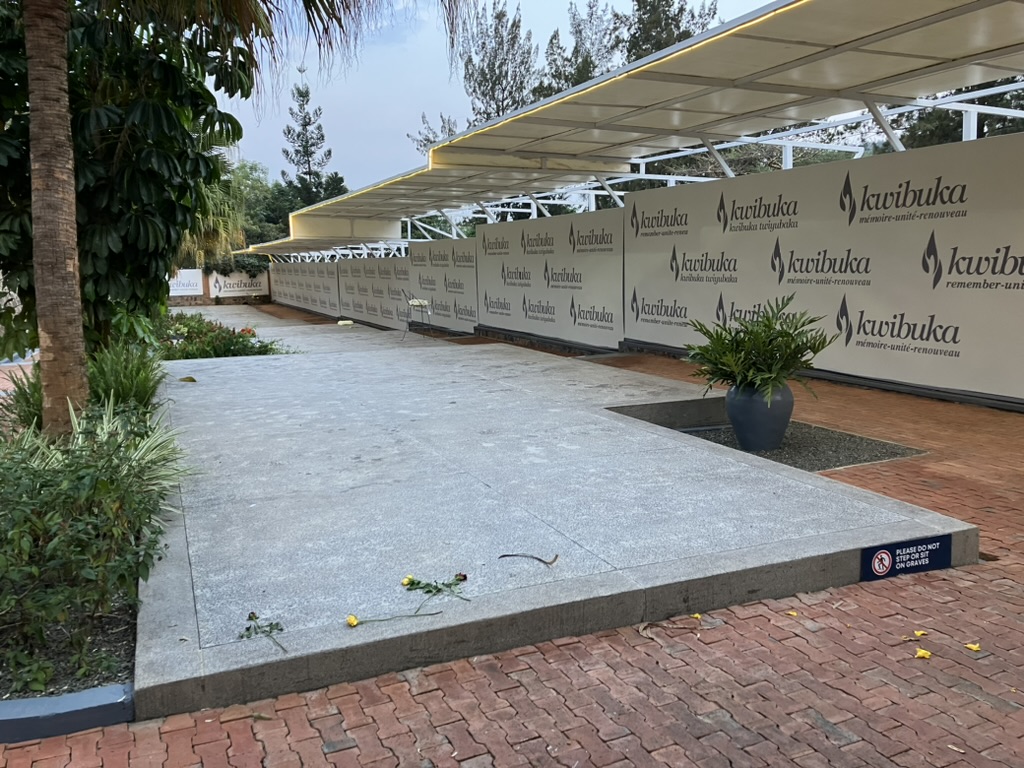
Every July 4th, Rwanda commemorates the end of the Campaign against Genocide War in Kigali. It was on this date in 1994 that the Rwanda Patriotic Army (RPA) gained control over Rwanda’s capital after the retreating Rwandan Armed Forces (FAR) fled. But the final weeks of the war in Kigali witnessed the FAR and genocidaires, such as the Interahamwe, lose much of their control to the RPA. Nevertheless, it was the late evening of July 3rd when the remaining forces at Camp Kimihurura, Camp Kacyiru, and Mt Kigali fled the city, going north. While Lt General (Rtd) Charles Kayonga, commander of Bravo CMF at the time, along with 7th CMF, followed the retreating soldiers, fighting continued.
During much of the Campaign War, most of the RPA’s forces and resources focused on Kigali. While the genocide regime, created shortly after the death of former Rwandan President Juvenal Habyarimana, based itself in Gitarama (April 16th) rather than Kigali, the city still held significant political, economic, and military importance. Within military studies, the city was the centre of gravity for the war. Additionally, during much of the fighting, many Rwandan Tutsis and non-extremist Hutus hid at locations such as St Andres, Amahoro Stadium, St. Paul, St Familie, and other places, waiting to be rescued.
Outside of Kigali, several RPA’s CMF fought throughout the hilly nation, such as the 101 (under Lt General (Rtd) Charles Muhire); 157th (under General (Rtd) Fred Ibingira); 7th (under Colonel William Bagire) and Charlie CMF (under Colonel Thadee Gashumba). However, these CMF focused on different areas with the 157th fighting across much of the east, south, and west of the nation. This is not to minimise the contribution of the other units. For instance, Charlie CMF focused its fighting in the Musanze region. Without Lt General (Rtd) Charles Muhire’s 101 CMF, much of southern Rwanda would not have been militarily secured. The mobile force even played a significant role in the capture of Gitarama on June 13th. The 7th CMF played a significant role in capturing the eastern neighbourhoods of Kigali, which aided in the capture of Camp Kanombe in late May.
As I argue in my recent book, The Strategy to End the Genocide against the Tutsi in Rwanda: Understanding the War in Kigali, the RPA’s central strategy was to end the Genocide against the Tutsi. To reach this strategic end, the RPA conducted military and humanitarian operations through various tactical methods. Stopping the genocide’s wrath was so important that the RPA at times risked military objectives in order to save Rwandans. Every force involved in ending the genocide received clear orders from its commander-in-chief, current Rwandan President Paul Kagame, to focus on saving lives even at the expense of military targets. For those mobile forces in Kigali, this was difficult in the urban setting. Those fighting outside Kigali did not have an easier time reaching this objective. Whenever I travel around Rwanda, I make it a point to reach out to former soldiers of the 157th CMF. I often express to them how I am in disbelief that they have liberated such a large and hilly environment in such a short time.
But there has always been a question I have asked myself, or others have asked me. When did the Genocide against the Tutsis really end? While many within the Rwandan government publicly stick to the July 4th date, other critical dates should be considered.
When Gisenyi fell on July 18th:
After the FAR fled Kigali during the evening of July 3rd and early 4th, many used the Kigali-Musanze route to escape. The RPA allowed the accessibility of the passageway for the retreating soldiers. This might lead to some serious questions about RPA military strategy. After all, why grant these forces the ability to flee? However, it becomes clear when studying the RPA’s military tactics, operations, strategy, and other relevant aspects. President Kagame had at times created ‘humanitarian zones’ for civilians loyal to the genocide regime to escape the upcoming battles. (This contrasted with the FAR, which would often leave weapons behind for Interahamwe to continue their genocidal killings or kill any remaining Tutsi during the RPA’s approach.) For instance, before the battle for Camp Kanombe, President Kagame ordered Lt Col. (Rtd) Jacob Tumwine to establish a corridor just south of Kanombe for any forces or civilians to escape the upcoming battle.
This falls in line with the encirclement tactics employed by the RPA, which focused more on creating confusion, decreasing enemy morale, and forcing them to flee (often leaving military equipment behind). This was the perfect response to what Minister of Defence Brigadier General Juvenal Marizamunda classified as ‘defensive military tactics’ that originated from the FAR’s close relationship with French forces. Whenever the FAR retreated, they rarely counterattacked but instead established newer, but weaker, defensive positions. During each retreat, the FAR’s morale declined, the RPA collected abandoned weapons, and planned a new strike. Thus, allowing the retreating FAR to use this corridor should be seen within the constructs of the RPA’s tactics and overall strategy.
The retreating FAR, which travelled north, would eventually be pushed into eastern Zaire, now the Democratic Republic of Congo (DRC) by July 18th. The following day, a new government designed by a modified version of the Arusha Accords was sworn in. However, the RPA did not have control over all of Rwanda. Many fleeing FAR travelled southwest by the end of the war, which was under Opération Turquoise. Nevertheless, July 18th is another date that could be considered as the end of the Genocide against the Tutsi.
End of Opération Turquoise on August 21st:
After the arrival of Alpha CMF under Major General (Rtd) Samuel Kaka to the Rwandan Parliament on April 12th, uniting with Lt General (Rtd) Charles Kayonga’s 3rd Battalion (better known as ‘The 600’), the FAR had little chance of winning the war. While they would continue fighting, thus allowing the Interahamwe time to murder Tutsis and non-extremist Hutus, the FAR never had the organisational structure, military expertise, morale, or clear strategic goals. Many took the opportunity to either participate in the genocidal killings or to profit from the chaos. This is not universal, as those such as Minister Juvenal Marizamunda, Major General (Rtd) Albert Murasira, and Brigadier General Evariste Murenzi, among others, served the FAR and/or fought the RPA but did not participate in the genocidal killings. Thus, their integration into the new Rwandan military after the war was possible despite them joining at different times and through very different circumstances.
Minister Juvenal Marizamunda was one of the FAR members who had travelled to the zone under Opération Turquoise during the waning months of the Genocide. He had spent much of the war in France for military training, but returned to find his family. Opération Turquoise provided him the ability to reconnect with family who resided in southwestern Rwanda. Unlike Minister Marizamunda, who did not participate in any genocidal killings, many within the FAR took the opportunity to continue waging their genocidal war against the Rwandan Tutsis.
By June 19th, France, which held close relations with the former Habyarimana regime, announced the creation of a multilateral force consisting of roughly 2500 French, Senegalese, and other fighters. Under French control, with UN Security Council approval, these forces created a zone in southwestern Rwanda, occupying nearly a fourth of the country. On the surface, this zone would be for those seeking peace away from the violence. The reality indicated a somewhat different objective with accusations of French support for the retreating FAR. During the days following the announcement of Opération Turquoise, the territory still held by the FAR and the genocide regime was celebrated. Akin to earlier on in the Liberation War (1990-1993), French forces aided the struggling FAR to push back the RPA. However, the FAR quickly realised these French forces were not there to fight the RPA.
Nevertheless, the RPA command was quickly prepared, through the 157th CMF, to fight these new forces. As General (Rtd) James Kabarebe commented during a 2023 conversation, the RPA began constructing military defensive bases to prepare for a new war. Thankfully, that never materialised. By August 21st, Opération Turquoise ended with many of the FAR and actors within the genocide regime able to cross into Bukavu, Zaire. Some question, such as Prunier, whether Opération Turquoise was France’s attempt to save their faltering allies.
Why consider August 21st as the end of the Genocide against the Tutsi? One of the controversial outcomes of Opération Turquoise was how it both saved and killed Rwandan Tutsis. While Bisesero is perhaps the best-known example of killings in this region, many testimonies exist of those who became victims thanks to the French forces. Many Rwandans who were in hiding since the beginning of the genocide began to leave their hideouts once they saw the foreign troops. Some believed they were either part of the United Nations Assistance Mission in Rwanda (UNAMIR) or another peacekeeping force. Thus, they believed the massacres were over. However, the French forces often did not disarm the Interahamwe and allowed them to still carry out their massacres. Rwandans who had spent the last few months in hiding were now an open target.
By August 21st, the French forces left, and the RPF immediately took the region. Thus, the last genocidal killings in Rwanda that continued during Opération Turquoise were now over.
First Congo War:
While conducting my PhD research on Rwandan foreign policy, I had the opportunity to meet Rwanda’s former military historian.[1] He said something rather interesting to me about the First Congo War (1996-1997). From August 1994 until October 1996, the former FAR, Interahamwe, and genocide regime restructured in eastern Zaire. Akin to Hamas’ use of Gaza civilians, the refugee camps were a way to be protected from responsibility; use international attention to the plight of the refugees as a political tool, and require aid agencies to pay taxes to the government-in-exile for access to the civilians. While using the cover of nearly two million Rwandan refugees, they conducted raids into Rwanda, often being bloody. These near-constant attacks led to the inevitable decision to invade eastern Zaire to remove the refugee camps. Despite criticisms by human rights organisations, former US ambassador to Rwanda Robert Gribbin called the refugees’ return to Rwanda orderly with little violence.
By December 1996, most of the refugee camps were dismantled. Many refugees returned to Rwanda with those from the FAR, Interahamwe, and genocide regime facing a choice: fight, flee deeper into the jungles, or return to Rwanda. Those such as Minister Juvenal Marizamunda decided to return home and join the new military, which later became the Rwanda Defence Force (RDF). However, many fled deeper into the jungles, leading most to their deaths. Those who survived continued to fight against Rwanda, in a significantly diminished capacity, created the Army for the Liberation of Rwanda (ALiR) and later the Democratic Forces for the Liberation of Rwanda (FDLR). Nevertheless, the dismantlement of the refugee camps resulted in a significant reduction in attacks against Rwanda by former genocide forces. The war continued until May 1996 with the overthrow of President Joseph Mobutu’s regime and the installation of Laurent Kabila as President. However, violence recommenced shortly afterwards.
Did it ever?
In 2013, while working at the National Commission for the Fight against Genocide (CNLG), now part of the Ministry of National Unity & Civic Engagement (MINUBUMWE), one could not escape Gregory Stanton’s description of the stages of genocide. Within his description of genocide are the expected categories, such as (in order): classification, symbolization, dehumanization, organization, objectification, preparation, extermination, and denial. This last element is key to the question of when the Genocide against the Tutsi ended.
While any of the dates above can be considered as the end of the massacres, within Rwanda, the perception by many is that the genocide continues, but in a different form. Actors, mainly in the Global North, hijack ‘human rights’ or ‘democracy’ language as a cover to promote their genocidal ideology. Some forms of genocide ideology consist of outright denying the genocide, or trivializing the suffering, reducing numbers, or blaming the RPA. Many, such as in the FDLR, still proclaim their desire to return to Rwanda to finish the genocide. There are numerous elements within this category that Rwandan foreign policy addresses. There have been acts of terrorism and physical attacks by actors still holding the genocide’s ideology, such as Paul Rusesabagina’s Party of Democracy in Rwanda – Ihumure (PDR-Ihumure), responsible for killing nine Rwandans back in 2018. However, the primary threat that genocide denial and the ideology at its core pose is the ontological insecurity it produces, as it threatens Rwanda’s socially constructed norm of Ndi Umunyarwanda.
Thus, some within Rwanda believe the Genocide against the Tutsi never ended, as there are actors who either want Rwanda to return to the genocidal massacres or deny what occurred in 1994.
Conclusion:
So, when did the Genocide against the Tutsi end? The July 4th date is the most well-known day, despite it commemorating more of a military victory in Kigali. Is July 18th the final day, as that is when the RPA captured the last major FAR-controlled territory? If this is the answer, then how does one account for those still dying in southwest Rwanda under Opération Turquoise? Fundamentally, the genocidal massacres continued in other parts of the country until they were under the RPA’s control. This does not ignore how some still died even after the RPA took a specific territory. The retreating FAR would often leave behind military equipment to Interahamwe, instructing them to wear civilian clothing and wait until the bulk of RPA forces left an area before returning to killing Tutsis. This led to RPA ‘clean-up’ operations to uncover and stop the Interahamwe. However, some human rights organisations mistook these operations as directed towards civilians rather than active genocidaires wearing civilian clothing. Did the dismantlement of the refugee camps during the initial months of the First Congo War end the genocide? The majority of surviving FAR, Interahamwe, and genocide regime after 1994 used these camps to launch attacks against Rwandans. The international community failed to disarm the camps until Rwandan forces did so in 1996. Lastly, did the genocide ever really end, as its ideology and denial still can be found today?
Unfortunately, I do not have an answer to this question. While I often point to August 21st as the end of the physical genocide, its pain continues to this day. Whether in the form of denial or revisionism, the ideology that killed roughly a million Rwandan Tutsis and non-extremist Hutus remains today.
[1] To keep focus on this article’s central question, when the Genocide against the Tutsis ended, I am avoiding diving into his situation.
 Jonathan R Beloff