Categories
Uncategorized

Rwanda: Paul Kagame’s fourth term as president – what his agenda will need to cover

Jonathan Beloff, King’s College London

Paul Kagame started his fourth term as Rwanda’s president in August 2024. He first became president in April 2000. However, as the leader of the Rwandan Patriotic Front, he has been the country’s de facto head since his rebel forces ended the 1994 Genocide against the Tutsi.

The Rwanda that Kagame now leads is significantly different from the one he took over in 2000. While economic challenges continue, the nation is largely more socially and politically stable and secure.

Rwanda still has a long way to go in its public-sector-led development – the country has set out to become a middle-income country by 2035 and high-income by 2050. Inequalities between the capital city Kigali and the rest of the country continue to grow. Rwanda still faces threats from the remains of the forces behind the 1994 genocide and growing tensions with neighbouring Democratic Republic of Congo (DRC).

Kagame faces the challenge of ensuring national stability as the foundation for economic growth and security. He also faces regional challenges, especially in Burundi and DRC, with questions surrounding their support for anti-Rwandan forces. This especially includes the Democratic Forces for the Liberation of Rwanda (FDLR) based in eastern DRC.

I have studied Rwanda’s political development, security landscape and foreign policy since 2008. In my view, Kagame’s primary agenda for his new term will be increased state-building and capacity, regional policy and continuing national stability.

Success for Kagame over the next five years should be a Rwanda closer to reaching its middle-income plan, with a better run government bureaucracy to implement public policy and distribute social services. Hopefully the neighbourhood will be more peaceful too.

Building state institutions

Rwanda’s development requires additional investment and economic growth, as well as better functioning state institutions. The country is currently classified as a low-income economy. Kagame will continue to be the nation’s primary ambassador for its commercial diplomacy and build the state’s institutional capacity for national development.

The continued construction of the Rwandan state includes developing government institutions to implement public policy and governance. Many new bureaucrats and leaders within government offices are part of Rwanda’s generation of millennials who hope to become Rwanda’s future. This would help move the country away from a reliance on established but older officials.

The extent to which government boards, ministries and organisations become effective could determine the future of Rwandan politics. Some Rwandan Patriotic Front members believe that a post-Kagame Rwanda will not necessarily have another single strong leader, but rather institutions capable of carrying out public policy and governing the country.

Building up state institutions would help deliver on the nation’s development plans. Vision 2020 and Vision 2050 are hinged on providing security, education, universal healthcare and growing cash crop exports like coffee and tea.

Tense regional context

Rwanda’s growth relies on securing its borders. In his inauguration speech, Kagame noted the importance of addressing regional security threats and sources of instability. The most pressing of these are the deteriorating relationship with neighbouring Burundi and the long-running conflict in the DRC.

Over the past two years, relations between Rwanda and Burundi have declined as Burundian president Évariste Ndayishimiye has developed closer ties with DRC president Felix Tshisekedi.

In January 2024, Ndayishimiye closed Burundi’s border with Rwanda. He accused his northern neighbour of contributing to the growing instability in eastern DRC by supporting the M23 rebel group. He also accused Kigali of aiding in the training of the Red Tabara rebel group, which has been fighting the Burundi government since 2015.

The deteriorating security situation in eastern DRC has led to growing tensions between Kagame and Tshisekedi, who has previously called the Rwandan leader “Hitler”. Tshisekedi also threatened to invade Rwanda, accusing the country of meddling in Kinshasa’s affairs. The UN has accused Rwanda of aiding the M23 rebels, which Kigali has denied.

Since 2021, increased attacks against the Banyarwanda community in eastern DRC by various rebel groups and the Congolese military have led to a revival of the M23. The rebel group was largely defeated in 2013. It claims to be fighting for the rights of the Banyarwanda.

Congolese government officials, such as higher education minister Muhindo Nzangi, have called for greater military action by the Congolese military and civilians against the M23, Rwanda and the Banyarwanda community. While Kagame consistently calls the issue domestic for the DRC, there is growing concern in Rwanda for the Banyarwanda, whom some see as being at risk of experiencing genocide akin to Rwandans in 1994.

As it stands, tensions between Rwanda and the DRC have led to several border skirmishes. For instance, a Congolese fighter jet was shot at by Rwandan military forces in January 2023. Two months later, a Congolese soldier was killed after he crossed into Rwanda and shot at soldiers.

Kagame must balance national security and the rising tensions with his country’s neighbours. This will most likely require him to work with regional allies to address the roots of the Congolese conflict.

Political stability

Kagame’s primary campaign promise was continued political stability for sustained economic growth. On the surface of it, this seems to have been a persuasive argument: Kagame won the election with 99.18% of the vote.

However, human rights groups have condemned the July 2024 election results, claiming they were a result of Kagame having stifled internal opposition.

Political opposition actors such as Victoire Ingabire and Diane Rwigara have little room to rally support within Rwanda. Western organisations often claim this is a result of political suppression. However, for some Rwandans, these politicians are viewed as promoting a failed ideology based on identity politics that doesn’t align with the aspirations of the country.

Kagame continues to be viewed as a symbol of Rwanda’s post-genocide consistency. However, there will come a point where a successor will need to be found. If the country develops strong political and governing institutions, it will no longer need to rely on a singular leader after Kagame eventually steps down.

Jonathan Beloff, Postdoctoral Research Associate, King’s College London

This article is republished from The Conversation under a Creative Commons license. Read the original article.

Categories
Election

Rwanda’s President Kagame Sworn in for Another Term: Challenges and Promises

On 11 August, Paul Kagame was sworn in for another term as President after winning the recent July 2024 Presidential election. He won over 99% of the vote, promising a continuation of Rwanda’s current tract towards development. Unlike the smaller parties, President Kagame and his Rwandan Patriotic Front (RPF) promised broad development ideas, security and continued stability. Other political parties and his presidential opponents, such as Green Party Leader Dr Frank Habineza and Independent candidate Philippe Mpayimana, focused more on specific public policy ideas. While only being appointed President back in 2000, he has been the primary political actor since the 1994 Genocide against the Tutsi. International critics in academia and human rights organisations question what they see as President Kagame’s authoritarian rule over the country.

Since officially taking power, President Kagame’s primary policy goals consist of security, national development and stopping the cycle of ethnic divisions which led to Rwanda’s genocide. These policies are all under the social contract between President Kagame and his RPF with Rwandans. The political establishment retains power to guide Rwanda’s development, and in return, the population receives security, stability and improvement in their daily lives, such as electricity, health care facilities and schooling. However, President Kagame faces significant challenges in ensuring Rwanda’s continued development. These challenges include the growing socio-economic divisions, the rural-urban divide, the need for growth in the private sector, and the effects of climate change on Rwanda’s agricultural industry. Below are the broad issues which will occupy President Kagame’s next five years.

Continuing the Stability:

During the RPF’s campaign, promises of continued stability were found throughout the country. This encompasses several aspects of life beyond security, including economic and political factors. The stability issue could be heard frequently during President Kagame’s campaign speeches. He often promised continued stability for Rwandans, which was seemingly very welcomed. During the day of domestic voting on 15 July, many Rwandans discussed their desire for continued stability. The concept broadly meant for these Rwandans how they could set up their lives knowing that their investments, whether in terms of a business, farmland, etc, will still be intact in the future.

Economic stability encompasses the continued progress of Rwanda’s current path of development. Rwanda aspires to become a middle-income country by 2035, which requires significant economic growth. Beyond the global COVID-19 economic slowdown, Rwanda consistently sees GDP annual growth rates between 3.9 to 10.9 per cent. While there are accusations that these numbers are intentionally inflated, it is hard to argue with Rwanda’s growth over the past decade. Nevertheless, stability is a foundation for economic development as investors and businesses will be less concerned about future risks while establishing a business or investing. The lack of instability means their economic venture will not depreciate because of insecurity or violence, unlike in Rwanda’s past. Significant challenges still face Rwanda’s growth, such as the need for larger foreign direct investment in the private sector, the reduction of foreign debt, and unemployment. The issue of youth unemployment is a pressing concern, as seen in neighbouring Kenya. However, Rwandans seem to trust that President Kagame can best handle these challenges. Nevertheless, he and his government will need to do more to help spur economic growth.

Stability often incorporates issues of state security. Rwanda receives criticism from international human rights specialists for an overt security state. A critical element within the social contract between the government and the population is the promise of security. The insecurity of the early 1990s found in the Liberation War, also referred to as the Rwandan Civil War in the West, the Genocide against the Tutsi and the later 1994-1996 attacks from neighbouring Zaire, now the Democratic Republic of Congo (DRC) have largely ended since President Kagame took power. Physical security is important not only in terms of state security but for the previously mentioned economic stability. Rwanda’s security agencies, the Rwanda National Police (RNP), Rwandan Defence Force (RDF) and the National Intelligence and Security Service (NISS), largely keep Rwanda safe from security threats and instabilities from a region, the African Great Lakes, which is rife with civil wars, rebel groups and political turmoil. President Kagame’s government will need to continue to promote national security from physical, specifically the Democratic Forces for the Liberation of Rwanda (FDLR) and ontological, from genocide ideology, threats.

Finally, Rwandans’ desire for political stability seems contrary to the West’s increasing waves of populism and ‘change’ elections. While human rights organisations promote political fringe actors within Rwanda’s public space, such as Victoire Ingabire, most Rwandans are largely risk-averse to these political attitudes. Before the Genocide, from 1990-1994, Rwanda contained the multiparty democracy often preached by human rights groups. As Guichaoua describes, this period contained significant political turmoil, infighting and assassinations. It additionally opened the door for Hutu populism and genocide ideology to be legitimised as political actors, as seen by the establishment of the Coalition pour la Défense de la République (CDR). The political instability of this time is primarily remembered by Rwandans who lived during the early 1990s.

During the domestic voting day, one elderly lady discussed how the period’s instability, or as she called chaos, influenced her current desire for the present political stability. Whether she agreed with President Kagame and the RPF’s policies, she supports the significant decrease in political instability since they took power. The memory of the past political instability has yet to be properly understood as one of the reasons why Rwandans are so accommodating to President Kagame’s promises of continued political stability. He and the RPF must address what happens after he eventually steps down from power, which could lead to instability if not appropriately handled.

Who is the Successor?

One of the pressing questions that lurked before, during and after the election was who would eventually be President Kagame’s successor. During an RPF conference last March, President Kagame called for his party to start discussing his eventual replacement. While he can run for an additional five-year term after his current one finishes in 2029, being 71 years old, there seems to be a growing sense that this might be it for him.

During the Gahanga campaign rally on 13 July, some Rwandans commented on their anxiety about Rwanda’s future when Kagame is no longer President. He is the symbol of Rwanda’s post-genocide consistency and for Rwanda’s large youth population, over 65 per cent under the age of 35, the only President they know. Finding the appropriate successor is a dubious prospect, as relatively few candidates could take the role. Additionally, one Rwandan official commented how succeeding President Kagame will be a tall task with little upside as their accomplishments will always be compared to their predecessor.

However, the question of the successor is perhaps not as important as one might assume. One RPF party official commented that there is no substantial desire within the party to pick another strong man (or woman) candidate after President Kagame eventually steps down. Akin to the Rwandan official, there is a sense of fear that whoever succeeds him will never be able to live up to the mantle left behind. There is a greater chance for the successor to be unable or incapable of being that strong leader, as seen with Pasteur Bizimungu’s lacklustre presidency from 1994-2000. Thus, they have a rather different vision for Rwanda’s future leadership.

The assumption that President Kagame’s successor needs to be a strong man/woman leader is perhaps problematic. There is a sense that the RPF and some Rwandans want to develop the political and governing institutions rather than finding another Paul Kagame. The belief is to develop the effectiveness and independence of the legislative, courts and government institutions (ministries and boards) to such an extent that Rwanda will no longer need a singular leader as they have now. This is a tall task for a government which took form after the implementation of the 2003 Constitution. Nevertheless, the RPF seem to push for the development of these institutions, often with young bureaucrats and officials, rather than find another singular strong leader. Either way, President Kagame and his RPF will need to find a succession plan, whether an individual or strengthening the governing institutions, before he steps down from power.

Conclusion:

With the 2024 presidential election over and President Kagame sworn in for another five-year term, the Rwandan government has much to do to continue Rwanda’s development. Economic challenges will remain on top of the President’s agenda as national growth is still critical so that Rwanda does not fall backwards. Beyond the economy, he will also have to continue the advancements of social programs (healthcare and education), security (from physical and ontological threats) and infrastructure (roads along with water and electricity expansion). Most importantly, he will have to continue the current stability that Rwandans expect despite perhaps the need to take greater risks to develop the economy and attract foreign investment. While many will look for the individual who will eventually succeed Paul Kagame as President, the true test for the government will be whether it can increase its capabilities and capacity to be the true leader of Rwanda’s future.

Categories
Uncategorized

Analysis of Rwanda’s 2024 Presidential and Parliamentary Election

This is a modified version of a report submitted on Rwanda’s recent election.

Abstract:

This report reviews Rwanda’s 2024 Presidential and Parliamentary Election by Dr Jonathan R Beloff. The paper examines and analyses how Rwanda carried out its election. It provides insights about the final day of the campaign trail, the casting of ballots and vote counting. The research relies on data collected during a fieldwork period from 12 to 16 July. Research methods during fieldwork include interviews and conversations with Rwandans and ethnographic observations. This report provides observations, analysis and suggestions for future elections. Overall, it concludes that Rwanda conducted a relatively smooth election with no issues of voter fraud, intimidation or ballot stuffing.

Introduction:

From the 14 to 16 July, Rwandans went to the polls to cast their ballots for the President and Parliamentarians in the Chamber of Deputies. An estimated 8.9 million out of 9 million eligible Rwandans voted in the elections in Rwanda and internationally. As of 17 July, President Paul Kagame from the Rwandan Patriotic Front (RPF) won the Presidential election with over 99% or 8.8 million votes. Opposition candidates Dr Frank Habineza from the Green Party and Independent candidate Philippe Mpayimana won 44,479 and 28,466 votes, respectively. At the writing of this report, the RPF won over 68.8 per cent of Parliamentary votes or 37 seats in the Chamber of Deputies, with other minority parties reaching between 5 and 11 per cent. The final vote counts were announced on the 22 July.

This report concludes that no violence, election fraud, or other problems occurred at visited polling locations.

Despite the relatively smooth operations of this election, it will receive international criticism as unfair and unfree. The election process has and will continue to receive international criticism as many accuse the Rwandan government of promoting a one-party dictatorship under the control of the RPF and President Paul Kagame. The accusations made against Rwanda’s elections broadly compose excluding potential oppositional candidates, voter suppression and intimidation, as well as fraudulent vote count. Despite many international news media, organisations on democracy, human rights organisations and individuals accusing the election as fraudulent, they did not take the opportunity given by the National Electoral Commission (NEC) to observe. While it is not proper to speculate their reasons not to do so, it likely stems from how witnessing Rwanda’s election will not benefit their existing narratives and conclusions about Rwanda’s political system.

After receiving permission from the NEC, I (Dr Beloff) travelled to Rwanda to witness the election process. Since December 2022, I have asked several Rwandans, mainly in Kigali and Musanze, their opinions of Rwanda’s political system and democracy. During recent fieldwork periods of December 2022 to March 2023; August to September 2023; March to April 2024; and June 2024, I interviewed or held conversations with Rwandans of different ages about their perceptions of Rwanda’s political system. These interviews were intended to establish a preset understanding of their beliefs, perceptions, and problems with the current political structures. Additionally, I observed how Rwandans engage on social media within the context of the political system, both in terms of structures (how the government operates) and politics (political party campaigns). Returning to Rwanda on 12 July and staying during the election permitted me to engage with Rwandans while they voted and witnessed the political process in person. This methodology was important as it prevented preconceived notions or conclusions from the Global North when studying Rwanda’s political election.

Overall, I conclude that no significant problems existed in Rwanda’s 2024 election that would signal fraud. I witnessed no voter intimidation, pressure or ill practices while the votes were cast and counted. As an observer, the entire process was transparent, with Rwandans willing to discuss why they were voting rather than who they were voting for. Nevertheless, there are ways for the election to be improved, which are suggested later in this review.

Methods:

This report relies on qualitative research methodology. The primary researcher, Dr Jonathan Beloff, is a Postdoctoral Research Associate at King’s College London focusing on the African Great Lakes region. While his research typically focuses on Rwandan foreign relations and the Campaign against Genocide War, his research capabilities allow for a wide range of topics. His first visit to Rwanda was in 2008; he began researching Rwanda in 2012. His research methodology uses qualitative research methods such as semi-structured interviews, conversations, archival material and ethnography. Dr Beloff approached Bonheur Bobo d’Amour Pacifique, a Rwandan, to assist in the research for this report. The two have known each other since 2012, when Mr Pacifique worked at the Kigali Genocide Memorial (KGM). Mr Pacifique provided translation support and helped Rwandans to identify their perceptions, beliefs, and opinions at the various polling stations.

Dr Beloff travelled to eleven polling stations in Kigali, Bugesera, Ntarama, Masaka and Kabuga on 15 July. As the elections were from 7:00 am to 3:00 pm, there was a logistical limit to the number of sites the two could visit. Appendix A has a list of the polling stations that were visited. Observations of vote counting were in Kabuga. Dr Beloff and Mr Pacifique presented themselves to the site manager at each site. After introductions, they requested to visit different voting rooms with an average of three per site. The two observers inspected the rooms to see if outside actors such as police, military or other security officials were in the voting rooms.

Additionally, Dr Beloff inspected voting booths to see whether outside influence could impact a voter’s selection. They would then talk to one to three staff workers and observe people, often two to five at a time, voting in each room within the polling station. Afterwards, they would talk to Rwandans, an average of two to ten, who were waiting in line or had just voted. A rough estimate of fifty Rwandans were interviewed on their opinions of the election. No Rwandan was asked who they voted for or for their identification. They used every measure to protect all individual rights, and no names were recorded in order to promote privacy. The research included ethical considerations prior to conducting any interviews or conversations. Dr Beloff did visit an additional polling site on 16 July in Gisozi, Kigali.

Dr Beloff analysed the collected data through a triangulation process and discourse analysis. Triangulation utilises different sources of data to find underlying correlations and themes. Discourse analysis focuses on the use of language and terms to uncover understanding. These methodologies for processing the data are still in the early phases. Beyond this report, Dr Beloff will be submitting at least one academic journal article on the election and a blog post for his website for non-academic readers. Triangulation and discourse analysis will be utilised in the writing of these articles.

It is important to state how no polling site prohibited Dr Beloff or Mr Pacifique from observing the election, whether in terms of voting or counting ballots. There were no obstructions in asking questions, and many election workers provided full access and responses. Neither observer provided prior notification to visited polling sites.

Background:

Rwanda’s pre-colonial political system relied on the jurisdiction of the Mwami, translated as ‘King’. The political system relied on the Mwami, with their chiefs running much of the kingdom at the local level. Most hills, villages, or locations had three chiefs who would implement political rulings and govern, all subject to the Mwami. With the arrival of European colonisation, first by the Germans in 1884 and later by Belgium in 1917, the powers of the Mwami were privately minimised while publicly still being seen very much as the law of the land. However, actual political power rested with colonial officials. The Mwami often became either a puppet or a scapegoat for European powers to avoid local anger and responsibility for their frequently brutal policies. Rwanda’s 1961 referendum on the monarchy signalled the end of its rule while the nation turned into a republic. The following election that year for Parliament saw the Parti du Mouvement de l’Emancipation Hutu (Parmehutu) gain a majority of seats in the newly established Parliament. Its leader, Grégoire Kayibanda, became Rwanda’s first President after independence in 1962. His First Republic (1962-1973) witnessed greater authoritarian control and the dismissal of oppositional political parties following subsequent elections. In July 1973, Minister of Defence Juvénal Habyarimana instituted a coup d’état, removing President Kayibanda from power. He quickly established his political party, the Mouvement Révolutionnaire National pour le Développement (MRND), and banned other political parties such as the previous Parmehutu. President Habyarimana and the akazu, loosely translated as ‘little house’, dominated Rwanda’s political landscape until 1990.

During the early 1990s, Rwanda’s political space opened, with many parties establishing themselves. For instance, were the established parties of: Mouvement Démocratique Républicain (MDR), Parti Social Démocrate (PSD), Parti Libéral (PL), and the notorious Coalition pour la Défense de la République (CDR). Additionally, the Rwandan Patriotic Front (RPF) established itself in 1987 after its Kampala Congress when it adopted its central political, economic and social plan of the Eight Point Programme. As described by Guichaoua[1], the early 1990s was a very turbulent political period. The Liberation War (1990-1993) and French pressure on Rwanda’s political space, sometimes referred to as Paristroika[2], led to significant instability within the existing political dynamics. The opening of political space allowed for extremist parties, such as the CDR, along with extremist elements in the non-Habyarimana (MRND) parties. Political assassinations, intimidations and cancelled elections were common during this period. Despite the initial hopes for stability and peace after the August 1993 signing of the Arusha Accords, Rwanda collapsed into genocide. The 1994 Genocide against the Tutsi began on the night of 6 April and continued until the Rwandan Patriotic Army (RPA), the military wing of the RPF, ended the genocidal massacres in the Campaign against Genocide War. However, up to one million Tutsis and non-extremist Hutus died. After the Genocide, a new government was formed on 19 July with a modified version of the past Arusha Accords. The changes mainly consisted of removing Hutu extremist parties such as the MRND and CDR. By 2000, Vice President and Minister of Defence Paul Kagame became President with a new constitution by 2003.

Rwanda’s 2003 Constitution shifted the nation’s political institutions. The President would have up to two terms consisting of seven years each. This changed in 2015, with the President only having five-year terms. The new Parliament contained two chambers. The lower, the Chamber of Deputies, consisted of 80 seats, with only 53 for elected officials. The remaining 27 seats are designated for women, disabled and youth officials. Elections are held every five years, except for the 2024 election, six years after the previous election. Unlike the lower chamber, the upper chamber, the Senate, consists of 26 members. They provide reviews of laws passed by the Chamber of Deputies. The NEC announced the 2024 Rwandan Presidential and Parliamentary elections earlier that year. Article 100 of the Rwandan Constitution states that, “Elections for the President of the Republic are held at least thirty (30) days and not more than sixty (60) days before the end of the term of the incumbent President.” Three candidates stood for President (incumbent President Paul Kagame, Green Party Leader Dr Frank Habineza and Independent candidate Philippe Mpayimana) with a total of six political parties (RPF, Liberal Party [PL], Social Democratic Party [PSD], Ideal Democratic Party [PDI], Democratic Green Party and PS-Imberakuri) and one independent candidate (Janvier Nsengimana). The election took place between 14 to 16 July. Voters from the diaspora voted on 14 July, with Rwandans in the country voting on the following 15. The final day of voting, 16 July, consisted of the 27 special seats for the Chamber of Deputies. 

Rwanda’s political environment is mired by international criticism alleging Rwanda is a one-party state controlled by the RPF, with President Kagame as an authoritarian dictator. Professor of Democracy at the University of Birmingham Nic Cheeseman and Human Rights Advocate Jeffrey Smith categorise Rwanda’s democratic elections as saturated in authoritarian practices in human rights abuse.[3] Professor Filip Reyntjens from the University of Antwerp consistently described Rwanda’s political system as a dictatorship with no political or electoral rights.[4] Human Rights Watch[5] and Amnesty International[6] also criticise Rwanda’s democratic practices. Their findings influence foreign governments’ engagements with the Rwandan government. For example, a 2017 Amnesty International report criticised Rwanda’s democracy as authoritarian and aimed in its report to influence US foreign policy towards Rwanda.[7] These critiques continued before, during and after the July 2024 election.

Election Campaign:

This section is rather limited as much of my exposure to the political campaigns came from social media and online articles. However, I arrived in Rwanda on 12 July, before the RPF’s final campaign rally at Gahanga. As I was unaware of the rally’s location, I went along with an official from the Rwanda Governance Board (RGB). Accompanying the RGB official was beneficial as he and others at RGB informed me of the procedures of Rwanda’s election and the institution’s role in ensuring a free and fair election. We arrived at the rally around 8:00 am with long traffic lines and tens of thousands of people already camped out at the venue. At the event, I spoke to roughly 20 Rwandans about why they were attending and their opinions of Rwanda’s democracy. Many commented on their desire to see President Kagame at the final campaign rally. For some, this was possibly their only time to see their President live rather than through the internet or television. Others commented that they wanted to ‘join the party’, a synonym for the rally. The rally’s environment was infectious as Rwandans danced and sang songs blasted on the speaker system.

The rally itself was a fascinating event in terms of messaging. The primary difference between the smaller parties and the other Presidential candidates compared with the RPF and President Kagame was rhetoric. The first group discussed public policy they would implement if elected. The RPF and President Kagame differed, focusing more on general slogans of ‘development’, ‘security’, ‘stability’ and so on. It was important to hear these keywords as voters would later use them as reasons for their decision to vote. However, little to no public policy recommendations were mentioned (based on the translation I received from a different RGB official). President Kagame’s campaign message was on how voters should continue to trust him and the RPF to continue Rwanda’s development since the Genocide against the Tutsi.

The rally illustrated the political realities of Rwanda. The RPF is the de facto political party for which Rwandans will vote. The other parties and Presidential candidates have to convince voters, through policy suggestions, why they should vote for them. The RPF does not need to campaign as the population is well aware of its track record regarding broad policies and decision-making. Many commented during the campaign rally and election that they trust the RPF to continue Rwanda’s stability, which is necessary for continued growth and development. There is a significant distrust in voting for political parties or actors unconnected with President Kagame. One older woman in her 70s commented on how the pluralistic political system of the early 1990s led to instability. It only ended after the RPF took power by ending the Genocide against the Tutsi. Thus, the claims that the RPF suppresses political parties and candidates are problematic as they do not reflect the reality of the difficulties faced by any different political party. Rwandans seemingly trust and will continue to rely on the RPF and President Kagame as they know their governance, policy, and security accomplishments.

Election Day – 15 July:

At roughly 6:50 am, we reached the Rukiri I APAPAC in Remera, Kigali. This was the first location of an intense day of visiting 11 polling stations. The polls officially opened at 7:00 am, but perhaps 50-75 people formed two organised queues. In front of the lines were election volunteers being sworn in. One volunteer later stated how important it was for the public to witness the swearing-in ceremony. It illustrated public transparency and openness to invite Rwandan voters and quell any hesitation about the election’s legitimacy. At exactly 6:59 am, the site manager finished the ceremony by lowering his elevated right hand. People began to swarm to the rooms designated for their particular villages. At first, It seemed confusing why these people queued just to race to their respective rooms later. Rather than forming a mob around the doors, they formed new lines again. All while the police were perhaps 20 meters away, the furthest they could physically be, from the voting rooms. At this location, only one police officer could be spotted, with another community security man keeping his distance.

After finding the site manager, as per procedure, he showed us one of the voting rooms and explained the voting process. Waiting voters lined up outside the room, with those in the front of the line having their identification cards temporarily taken. The elderly and sick did not have to wait in line as volunteers would bring them directly to the voting rooms. The election volunteer searched for their name in the register book. Once found, the first volunteer checked their names off the register, and they could come in. The voter would be allowed in and given back their identification card. Some polling stations would return the identification cards once the person had finished voting.

Nevertheless, at this and all the other locations, the voter would be given a white paper ballot containing the Presidential candidates. The ballots contained the candidates’ names, party affiliation symbols, party names and pictures, and an empty box. The voter would vote for their desired candidate in a private voting booth. A check mark or fingerprint in blue ink indicates the chosen candidate. Once the voter chose, they folded their ballot and placed it in a box containing a white lid and multiple zip tags. These tags prevented the boxes from being opened before the official counting of the votes.

After voting for President, the voter would be given a light brown ballot containing the different political parties and a single independent candidate campaigning for the Chamber of Deputies. The ballots were laid out similarly to the Presidential ones, with the only exception being that there were no pictures of any individuals. Voters collected their ballots and went behind a separate voting booth to cast their votes. Afterwards, they folded their ballot and placed it with a black lid in the box. Akin to the Presidential box, this box also contained zip tags to prevent tampering. Once they finished voting, the voter received a bit of purple ink on a finger or nail. The ink indicated that the person had voted. At some voting locations, the person’s identification cards would be returned to them. However, at most locations, they already had their identification cards. So, they departed the polling site, often first talking to people still waiting to vote.

Throughout the day, voters who had just voted or were waiting in line were asked questions about the election and international criticism of Rwanda’s political system. Only one woman in her early 20s refused to answer, but many others wanted to explain why they were voting. Many commented how they saw it as their civic duty to help promote Rwanda’s reconstruction since the 1994 Genocide against the Tutsi. Others remarked how they wished to be part of the political process. Interestingly, only 2 out of the at least 50 voters we spoke to explicitly stated which candidate they voted for, with others only stating why they wanted to vote. One expressed their duty to vote for President Kagame to illustrate support for his Presidency. History played a significant role in why some support Rwanda’s current political system. A middle-aged woman, perhaps in her 50s, commented how the instability of Rwanda’s political past in the early 1990s and up to the Genocide against the Tutsi influenced her voting patterns. Without stating explicitly who she voted for, she explained how the past instability led her to vote for the current establishment, which created and sustained stability and security. These two elements are necessary for any national development. The terms’ stability’, ‘security’, and ‘development’ were keywords used in the RPF’s campaigns. The frequency of their usage by voters who talked to us indicated who they were likely voting for without explicitly stating the political party or candidate. Perhaps the most interesting aspect of talking to voters was their desire to vote for rather than against a particular political party or candidate. Unlike in the Global North, where most voters often vote against a candidate rather than for one they truly support, Rwandan voters seemed to be voting for candidates and political parties they supported.

Many Rwandans shook their heads when asked about Global North’s criticism of Rwanda’s political system. A few voters became furious with even the question but calmed down once they realised the reason for it. The most common response was that international critics from human rights organisations, academics, news media sources, etc., needed to travel to Rwanda to witness the election. Many complimented me for my willingness to witness the elections and ask Rwandans questions. The engagement with Rwandan voters seemed to be non-existent with foreign-based observers. At one location, GS Gahanga I St Joseph A in Gahanga, a group of African foreign observers entered the polling site. The site manager later complained to us about how they did not follow protocol when reporting to him when they arrived. Additionally, they briefly went into a few voting rooms, made check marks on a paper and departed. One observer came to us for our opinions on the election and, more specifically, why we thought Rwandans were voting in the election. It seemed somewhat paradoxical that this foreign observer was more interested in our opinions than the Rwandan voters. When confronted about this issue, he quickly dismissed the need to ask Rwandans for their opinions.

Voters were also asked about the accusation made by those in the Global North of candidate suppression. Those interviewed dismissed the notion that any ‘serious’ candidate was denied the ability to campaign. Ndi Umunyarwanda influenced whether a candidate was considered as ‘serious’. Those who are seen as promoting ethnic divisions or genocide ideology were disregarded as not a ‘serious’ candidate. Their support for dismissing these candidates was seen as positive, as it illustrated how serious the Rwandan government was in promoting national security and stability. Critical political parties such as the FDU-Inkingi, Rassemblement Républicain pour la Démocratie au Rwanda (RDR), Mouvement Rwandais pour le Changement Démocratique (MRCD), Ishema Party and the Rwanda National Congress (RNC) along with their supporters based outside of Rwanda, are seen as ‘spoilers’ of Rwanda’s current political, social and economic development. In particular, the mention of Victoire Ingabire Umuhoza led those interviewed to roll their eyes, shake their heads or laugh at the name. Overall, no Rwandan commented on including these oppositional political actors in the election. Instead, they discussed their support for their exclusion as they are perceived as threats to Rwanda’s progress and a return to the failed political system of the early 1990s that led to the 1994 Genocide against the Tutsi.

Travelling to different polling locations allowed for a greater pool of responses from voters. All expressed how they did not feel forced or pressured in any way to vote. New and young voters between 18-30 years old expressed their excitement to vote. The RPF’s rhetoric on youth voting was in full force as this section of voters expressed their belief in the importance of voting with terminology similar to the Gahanga rally. However, there was no sense of blind support for the RPF. Rather, many commented on their support of Rwanda’s current development. One did mention how there were still serious problems in Rwanda, such as the rural-urban divide and unemployment, but felt the current government, i.e. the RPF and President Kagame, were best to solve these issues. As witnessed in every polling station, it was apparent that youth political outreach was effective.

The decision to visit multiple polling locations allowed us to determine whether there was consistency in the voting procedure. Consistency in the practices provides insights into whether election volunteers were properly trained. No polling stations were informed of our visit, with many site managers simply asking to see the observer identification badges. After briefly examining the badges, the entire polling station became open for inspection. We were allowed to ask questions to volunteers and voters alike. However, some other observers commented on how they faced inconsistency in access. While volunteers were friendly and completely transparent about the process, there was a greater sense of stress and exhaustion as the day continued. Many stations expected thousands of voters based on the registers, but by 10:00 am, hundreds to thousands of non-registered voters at the polling station arrived. This created more significant stress for volunteers who had to handle the influx of unexpected voters.

Throughout the day, polling stations blasted music with messages about the importance of voting, democracy, Ndi Umunyarwanda, etc. There were no songs from any political parties or campaigns. The speakers also made announcements for voters. These contained information about the location of certain voting rooms, for voters to see an election volunteer if they needed assistance or how there were so many hours before the polls closed. The music did provide what many called a ‘wedding’ atmosphere. While driving to search for certain polling stations, we often looked for banana stems and leaves set up near polling sites, a traditional way to indicate the location of a wedding within Rwandan society. Each voting room contained decorations. Some contained fairy lights, streamers, pieces of art, and fruit, and in one location, there were reeves on the floor. The decorations were organised by community leaders from the different villages. When asked why the rooms were decorated, one volunteer commented on how the voting booth should feel like a ‘home’. Others commented how these are items used at weddings. Interestingly, there seemed to be some notion of how the Rwandan population was in a ‘wedding’ with the political system, and thus it was a time for celebration. The notion of the ‘wedding’ could be seen in nearly every polling station. Like the RPF’s campaign rallies, the party atmosphere allowed community engagement. After voting, Rwandans could be seen meeting with fellow voters to discuss social gossip.

Throughout the voting process, we inspected voting booths to see whether there were any outside influences or applied pressures. None can be reported. Police presence was always minimal, with many seemingly focusing more on providing assistance in parking than anything else. All were kept a distance from the voting rooms and could only enter if requested by the site manager. However, no site manager stated the need for police assistance. Fundamentally, there was no police or security interference in the election, including any form of intimidation or threats. The only presence of RDF soldiers was at the Kigali Primary School in Kanombe, Kigali, but their presence stemmed from their need to cast their votes. After arriving at the polling station, they reached the front of the line but went through the same processes as any civilian. Once they cast their vote, they departed. One RDF officer commented on the importance of the military voting as they, too, need to perform their civil duty.

Overall, I can report no issues during the voting process. Once again, I did not see any form of voter intimidation. This includes any threats, pressures or influence by any political party or government official. All site managers provided transparency and were willing to answer any questions. It was noticeable that by 12:00 pm, site managers and volunteers grew increasingly agitated, but it was a result of the stress of the larger-than-expected number of voters. The site managers seemed somewhat unwelcoming at only two sites, but they quickly explained the stressful situation. As seen in the Criticism and Suggestions section below, more resources and increased capacity at polling stations are needed. Nevertheless, based on the polling stations we visited, we observed no issues with the voting.

At around 5:30 pm, we returned to the Rusororo Adventist Primary School in Kabuga (which had an estimated 7000 voters) to witness the counting of the votes. We originally had reached the polling station at 3:00 pm, but there were still hundreds, if not over a thousand, Rwandans waiting to vote. The site manager requested that we return within two hours after our inspection when, hopefully, the voting was finished. It would take until 4:55 pm for the final ballot to be cast. The staff were given 30 to 45 minutes of badly needed rest. Once the counting began, the observers and some locals entered different voting rooms. The site manager informed us that the NEC required that the preliminary election results be reported by 9:00 pm. Thus, there were only a few hours to count the votes. Each room contained multiple green posters with handwritten names of the presidential candidates. Another section of the board included the political parties for the Chamber of Deputies. Each vote would be announced with someone on the posters (taped to the classroom’s blackboard) checking off the number. One person would open the ballots (which were previously folded) and hand them (whether one at a time or a bunch) to someone who would read the name (first President and then Parliament). They would then hand the paper off to someone for them to confirm. This person then handed it to one last person who showed me each vote. There were between 3-6 people at the vote counting. After the counting was done, another volunteer displayed the empty box. The ballots would then be placed into them with new zip tags.

Once the count for the Presidential ballots ended, the volunteers turned to the Parliamentary ballots. They began to be read off and check-marked for each political party for which the ballot was for. The high number of RPF led to a minor mistake of the PL not being counted. I brought this to the attention of the counters, who fixed it. They then decided to pause after reading all non-RPF votes so they would properly be recorded. Once the votes were counted, the ballots and the green posters were locked in a room. NEC would pick them up after the special election on 16 July. When the counting was done, we went to each room to see the election results and whether there were any discrepancies from the results in the first room. At no point were we denied the ability to see the green posters. Some offered to allow us to look into the boxes that had yet to be zip-tagged. Overall, there were no severe problems in the counting of the votes or anything to suggest ballot stuffing.

Election Day – 16 July:

The final election day focused on the special seats for the Chamber of Deputies. This includes 24 seats for women, 2 for youth and 1 for people with disabilities. Unlike the previous day, this election is not open to the public. Rather, voters are community leaders in those special communities. I visited the APAPEC school in Gisozi, Kigali, to observe this unique vote. Only 67 registered voters could vote for a wide range of women candidates at this polling station. The voting process was akin to the previous day, except for only one voting booth, which the site manager explained resulted in fewer voters. The previous day’s ballots were locked away in a separate room at the polling station. It was clear through the window the zip tags on the ballot boxes to prevent tampering. Despite being perhaps 15 meters away, the sole police officer at the location had instructions not to let anyone enter the locked room. When questioned about the security of the ballots, the site manager dismissed the concern. He commented on how the likelihood of someone wanting to get to the ballots was minimal, the presence of the police officer, and how the vote counts had already been reported to the NEC the previous night (around 9:30 pm). The site manager then informed me how an NEC official would collect the ballots sometime in the afternoon. Akin to the previous day, I witnessed no vote tampering, intimidation, or ballot stuffing.

Criticism and Suggestions:

No severe comments or complaints exist as we witnessed how the elections were held freely and fairly. There are only a few critical comments on how the election occurred. These are presented with complete respect towards the Rwandan Government. Nevertheless, it is important still to note areas of concern and ways for improvement.

  1. Increased Polling Capacity:
  • A serious problem observed during the 15 July election was the over-crowdedness of the polling stations and the volunteer’s exhaustion. Many site managers commented that while they prepared for a large number, the number of voters exceeded their capacity. Voting queues began at some voting stations, such as GS Gahanga I St Joseph A, at 4:00 am, three hours before voting began. Throughout the day, no voting station had less than 15 people waiting in line. However, the norm was for at least 25-75 people to wait. This led to voters waiting in lines from 30 minutes to nearly two hours. The wait resulted from the relatively slow process of collecting identification cards, checking registers, recording in overdraft lists and voting itself. At any given time, only two voters were in the voting room. The high temperatures, with some going beyond 30c, led to the dehydration of some waiting voters and volunteers. A few voters were seen suffering heat stroke and needing medical facilities. One site manager commented how they needed but could not open more rooms for voters to speed up the process.

    The long delays for voters led to the election ending at Rusororo Adventist Primary School in Kabuga at 4:55 pm. This was nearly two hours after the official end of the election. While an announcement at 3:05 pm was made for voters to try other polling stations, Rwandans there refused. The site manager balanced the voting rights of those at the centre with the exhaustion of the election volunteers. Nevertheless, this led to delays and minor errors in counting votes.

    Most polling sites should have used empty rooms for voting. Site managers commented on how they planned rooms to contain 400-750 voters each, but this number seems too large for the process. Thus, this report suggests that designated voting stations utilise all available space and increase the number of voting locations.

2.) Vote Counting:

  • During the voting at Rusororo Adventist Primary School in Kabuga, there were minor problems with the vote count. The rooms contained poor lighting, forcing the volunteers to use their cell phones for additional light. Additionally, NEC needs to better train volunteers in vote counting, such as reading the names slower, to prevent mistakes. During the vote count for Parliament, I noticed how one vote was misread as RPF when it was for PL. I brought it to the attention of the volunteers, who corrected the error. From then on, votes for non-RPF candidates were read slower, with a pause before the next ballot. This comment does not suggest that there was voter fraud or purposely misreading of votes.

Conclusion:

Rwanda’s 2024 Presidential and Parliamentary elections witnessed over 7 million Rwandan voters casting their ballots for who they wish to see lead the nation over the next five years. This report relied on qualitative data collected at 12 polling stations in Kigali, Bugesera, Ntarama, Masaka, Gisozi and Kabuga, with a minimum of 50 Rwandans interviewed on their perceptions, beliefs and thoughts on the election and Rwanda’s political system. Additionally, the research relied on ethnographic methods to assess the election’s fairness. While international critics will make claims of the fraudulent nature of the election and the suppression of political candidates, this report concludes how I did not see any forms of voter intimidation, suppression or ballot stuffing to sway the election. This report does not deeply examine the allegations made by Global North critics of candidate suppression. Nevertheless, Rwandans were asked about this accusation, with all dismissing it. There were no police, military or any other form of security presence forcing Rwandans to vote for any particular candidate or political party. No RPF or political official forcibly influenced voters in casting their votes. The election should be considered as free and fair.

Appendix A: Visited Polling Stations

  1. Rukiri I Apapac Remera, Kigali
  2. Akabeza Remera, Kigali
  3. Busanza (Groupe Scolaire) Kanombe
  4. Kigali Primary School in Kanombe
  5. GS Gahanga I St Joseph A, Gahanga
  6. GS Gahanga I St Joseph B, Gahanga
  7. Ntarama GS, Ntarama
  8. Ntarama EP, Cyugaro
  9. Kanombe King David, Kanombe Kigali
  10. Wellspring Academy, Masaka
  11. Rusororo Adventist Primary School, Kabuga
  12. Gisozi APAPEC school, Kigali (site visit occurred on 16 July)

[1] Guichaoua, André, From War to Genocide: Criminal Politics in Rwanda, 1990-1994, (Madison: The University of Wisconsin Press, 2015).

[2] Beloff, Jonathan R. “French-Rwandan Foreign Relations: Depth and Rebirth of Diplomatic Relations.” The African Review 1, no. aop (2023): 1-26.

[3] Cheeseman, Nic, and Jeffrey Smith. “The Retreat of African Democracy.” Foreign Affairs (2019).

[4] Reyntjens, Filip. “Constructing the truth, dealing with dissent, domesticating the world: Governance in post-genocide Rwanda.” African Affairs 110, no. 438 (2011): 1-34; “Post-1994 Politics in Rwanda: problematising ‘liberation’ and ‘democratisation’.” Third World Quarterly 27, no. 6 (2006): 1103-1117; “Rwanda: Progress or powder keg?.” Journal of Democracy 26, no. 3 (2015): 19-33.

[5] Human Rights Watch, “World Report 2023: Rwanda,” 2024, retrieved from https://www.hrw.org/world-report/2023/country-chapters/rwanda

[6] Amnesty International, “Human rights in Rwanda,” 2024, retrieved from https://www.amnesty.org/en/location/africa/east-africa-the-horn-and-great-lakes/rwanda/report-rwanda/

[7] Amnesty International, “The State of Human Rights in Rwanda,” September 29, 2017; chrome-extension://efaidnbmnnnibpcajpcglclefindmkaj/https://www.congress.gov/115/meeting/house/106435/witnesses/HHRG-115-FA16-Wstate-AkweiA-20170927.pdf
Categories
Uncategorized

UK-Rwanda Migrant Deal: What Happens Now?

The newly elected Labour government under the leadership of Sir Kier Starmer has ended the UK-Rwanda Migration and Economic Development Partnership. As PM Starmer so bluntly commented, “The Rwanda scheme was dead and buried…” The controversial plan began while Boris Johnson was Prime Minister back in 2022. It was to send asylum seekers who entered the UK illegally to Rwanda. It would be in Rwanda where their claims would be assessed, and if they were credible, the asylum seekers could remain in the small but safe African nation. This plan is similar to the 2001 ‘Pacific Solution’ by Australia that sent thousands of asylum seekers to Nauru and Papua New Guinea.

The deal was criticised, with human rights organisations crying out about UK migration policy and Rwanda. Since its announcement, the agreement was challenged in the courts, eventually being termed unlawful based on Rwanda’s developing judicial sector. The Conservative-led government counteracted this decision by defining Rwanda as safe through the Safety of Rwanda (Asylum and Immigration) Act 2024. However, the UK government would increase the program cost beyond the initial £120 million to an estimated £541 million. Despite PM Starmer’s termination of the deal, at least an estimated £220 million had already been sent to Rwanda. Alain Mukuralinda, Deputy Spokesperson from the Office of the Government Spokesperson, announced that there was no clause within the previous agreement to return any funding.

Why did Rwanda go into this deal?

It should be no surprise to any observer of UK politics that the UK-Rwanda migrant deal would end with a Labour victory. The agreement was deeply partisan, with Rwanda being dragged into the British domestic political arena. While PM Starmer’s decision to terminate it might seem like a victory for critics of the Rwandan government, most Rwandans will not see it as that. While much discussion has been held on the UK’s perception of the deal, very few have tried to listen to Rwandans.

As I wrote before, many Rwandans held different opinions on why they supported the deal. Some supported it as they felt a sense of responsibility not to allow others to suffer the horrible refugee status they had once felt. A majority of Rwandans over the age of thirty have been either refugees or internally displaced persons at one time or another, with many governments not providing them with the opportunities, rights or dignity. Other Rwandans commented on how they saw it as a way to promote Rwandan nationalistic identity through a campaign to help others on the global stage. Working with various governments and global leaders to tackle the global illegal migration crisis increased the sense of national importance. While some commented on the financial opportunities, especially in developing Rwanda’s judicial sector, others were relatively uninterested. The challenges of everyday life overshadow Rwanda’s engagement with the international community.

During a recent trip to Rwanda in June 2024, I discussed the plan’s future with many Rwandans in Kigali. Many were interested in my analysis and its future with the incoming Labour government. As I tried to prepare Rwandans for its upcoming termination, many were seemingly just happy that their country had just been involved. Issues of illegal and legal migration saturate the political landscape of many nations, with Europe being no exception. Since the beginning of the Arab Spring in the early 2000s, hundreds of thousands from North Africa and the Middle East have crossed into Europe. This does not discount those from Africa, especially Eritrea and North Sudan, who trek across the Sahara desert and try to cross the Mediterranean Sea. Many do not make the journey as they either die from the extreme weather elements or are sold into modern slavery.

President Paul Kagame offered a solution for African nations, such as Rwanda, to play a critical role in solving this issue. This solution closely follows the notion of ‘African solutions to African problems’. Additionally, Rwanda already accepts tens to hundreds of thousands of regional refugees. Some Rwandans were proud of their nation’s soft power politics in trying to find a solution to the crisis.

What does this now mean for Rwanda?

The question now is perhaps not what will happen regarding UK-Rwandan relations. There does not seem to be panic about a significant deterioration between Rwanda and the UK, possibly its second most important nation in terms of its foreign relations. What was always important was for the Rwandan government not to be dragged into the domestic arena of British politics.

The bigger question is whether Rwanda’s willingness to participate in such an agreement will elevate it within the international community. The nation already receives praise for its contribution to peacekeeping in nations facing civil strife and terrorism. Its engagement with the UK, along with other countries, in accepting migrants provided it with another opportunity to develop its soft power in the global crisis of legal and illegal immigration.

Despite most nations, especially in the Global North, facing a similar migration crisis, few have offered significant solutions. Many policymakers hold short-term answer of simple deportation rather than developing complex solutions that might require a considerable shift in understanding the global political economy, security and migration. Perhaps Rwanda provided another short-term answer, having asylum seekers sent to their country, but it was at least a relatively new answer to the crisis. However, some used Rwanda’s willingness to accept migrants as a way to attack its government rather than trying to find an actual solution to the crisis.

Either way, Rwanda illustrated itself as a nation willing to try to find a solution to a global crisis. Despite PM Starmer ending the UK-Rwanda Migration and Economic Development Partnership, other countries and institutions, including the United Nations High Commissioner for Refugees (UNHCR), will continue working to send asylum seekers and migrants to Rwanda.

Categories
Uncategorized

How the International Community Continues to Fail in the Eastern Democratic Republic of Congo

Combatting African conflicts and human rights violations tends to fall within international responsibility with little to no beneficial actions or policies. Global commitments to foster peace and reconciliation, often in the form of peacekeeping missions, often fail or keep a fragile sense of stability as the contributions come from distant nations. Attention needs to be given towards regional solutions to conflicts. Understanding and promoting regional solutions provides insights into regional power dynamics that can be more beneficial in critically solving conflicts than relying on distant actors. An example is the current instability in the eastern Democratic Republic of the Congo (DRC).

The DRC is experiencing a wave of violence against the Banyarwanda population, who originate from Rwanda, which sparked the Movement of March 23 (M23) rebel force from its near decade of inaction.[1] The M23, based in the DRC’s eastern North Kivu province, is a mostly Banyarwanda rebel force promoting the community’s security interests by capturing important towns, villages and cities. Despite international attention to this crisis and the East African Community Regional Force (EACRF) intervention, there seems to be little hope for peace. While the core crisis is a domestic issue, its ramifications impact neighbouring Rwanda and the African Great Lakes region. This is not the first time the M23 and the Congolese military, the Armed Forces for the Democratic Republic of Congo (FARDC), fought against each other, as the M23 became an internationally known rebel force after its relatively short-term military success in the early 2010s. During this military action, the M23 captured the important eastern Congolese city of Goma in 2013.[2]

As the M23 caused havoc for the FARDC, the international community bounded together to combat what they perceived were the root causes of the conflict: interference from the neighbouring countries of Uganda and Rwanda. A United Nations Group of Experts on the Democratic Republic of the Congo (UNGoE) Report suggested these neighbouring countries were supplying, harbouring, and training M23 rebel forces.[3] In response, many nations withdrew foreign aid support to Uganda and Rwanda. While some international actors, such as the European Union and Germany, suspended aid, other countries, such as the United States, limited their foreign aid.[4] Various agreements between the Congolese government and M23, along with Uganda and Rwanda, such as the Luanda and Nairobi Peace processes, led to the rebels becoming relatively inactive.

Historical Context of the M23 and Banyarwanda:

Since the end of Rwanda’s genocide in 1994, when over a million refugees fled into then-Zaire, now the DRC, the two countries have become entangled. The First (1996-1997) and Second (1998-2003) Congo Wars witnessed bloody wars between Congo and Rwanda, including multiple other nations such as Angola, Uganda and Burundi. Despite the Luanda Agreement 2002, which saw the removal of foreign troops, DRC has remained in turmoil.[5] There are over 100 active rebel groups, from the small community-based ‘Mai Mai’ to larger groups such as the M23. One of these rebel groups is the Democratic Forces for the Liberation of Rwanda (FDLR), which comprises the military remains and ideology of Hutu extremists who perpetrated Rwanda’s 1994 Genocide against the Tutsi.[6] The Rwandan government consistently seeks to combat the FDLR, typically by force. Banyarwanda were targeted during the conflicts and became an essential ally for Rwandan forces. However, Reyntjens suggests that many have turned away from supporting Rwanda.[7] Since the end of the Second Congo War, Rwanda has been accused of interfering in Congolese affairs by supporting various rebel groups, such as the National Congress for the Defence of the People (CNDP) and the M23.

However, the recent wave of violence sparked regional concern with a relatively muted response by the international community. Within Rwanda, officials and citizens are cautiously worried about events in their neighbouring country spilling over into Rwanda. Despite some military incursions, such as the encroachment of a Congolese fighter jet in Rwandan airspace[8], the real concerns stem from what many perceive as genocidal threats. Genocide Watch describes the situation facing the Banyarwanda as “a slow genocide unnoticed by the international press.”[9] Specifically, the Congolese government’s rhetoric and treatment of the Banyarwanda is an acute cause for concern. The language used by members of the Congolese government, such as the Congolese Minister of Higher Education Muhindo Nzangi, suggests the FARDC work with the FDLR and the ‘Mai Mai’ groups in fighting not only the M23 but also anyone who holds Rwandan, specifically Tutsi, heritage.[10] One Rwandan genocide survivor commented:

What we [Rwandans] are hearing from Congo reminds us of 1994. We hear [from the DRC] the same anti-Tutsi hate speech as right before and during the genocide [1994 Genocide against the Tutsis]. Our [Banyarwanda] relatives are being targeted, terrorised and are in danger. Something must be done.[11]

Despite only being in the early months of the crisis[12], the international community has remained relatively silent. While some, such as New Jersey Senator Robert Menendez, a member of the US Senate Foreign Relations Committee, have condemned Rwanda for the recent wave of M23 violence[13], there has yet to be any form of financial, military or other type of sanctions. During past accusations of Rwandan interference in eastern Congo and accusations of dictatorial practices and human rights violations, the Rwandan government often responded with political tactics. One tactic frequently used is threatening the removal of its effective military contribution to peacekeeping missions.[14] Another tactic is to remind donor nations of how Rwanda is a case study in terms of how to effectively deploy foreign aid from the Global North.[15] These tactics and others are reasons for the continued international support for Rwanda. Nevertheless, how the international community currently is responding to the renewed crisis, and M23 contradicts past experiences when it condemned the rebel force and implemented sanctions against its alleged allies of Uganda and Rwanda. The critical question becomes why the international response has been so limited.

Discussions in Rwanda focus on the underlying belief that the DRC President Felix Tshisekedi does not have the same sway with the international community as his predecessor, Joseph Kabila.[16] The UNGoE’s most recent report seems to support the Rwandan government’s concerns about the FARDC’s relationship with the FDLR as an illegal mineral trade between the two actors reached US$71 million in 2022.[17] Nevertheless, there seems to be a preparation for future accusations. Rwandan officials such as the High Commissioner to the United Kingdom, Johnston Busingye, are warning that the root causes of the conflict are not because of Rwanda but ethnic divisions spurred by the Congolese government, which are, he alleges, not following past agreements.

What is the Solution to the Violence?

However, the ineffectiveness of regional efforts might signal difficulties to the broader international community in the current situation. Unlike when the UNGoE blamed the M23 and instability on outside actors, Uganda and Rwanda, today, there is no clear link between external forces and the M23. The rhetoric and attacks against the Banyarwanda also make it difficult for the Global North to support the Congolese government. On September 9, 2022, the East African Community sent a military force, the East African Community Regional Force (EACRF)[18], to foster safe zones and camps for internally displaced persons affected by the recent wave of violence.[19] A similar task force, the International Intervention Brigade, was sent into eastern DRC to stop the M23’s initial military campaign in 2012-2013 to take control over North and South Kivu. At the time, the DRC and Tanzania deemed it adequate to stop the M23 forces.[20] It enabled regional actors to solve neighbouring conflicts in what can best be described as ‘African Solutions for African Problems’.[21] Despite initially supporting it, the Tshisekedi government has recently encouraged public demonstrations against the regional military force. Accusations of the EACRF’s collaboration with the M23 largely stem from how, on multiple occasions, the M23 reportedly handed over captured towns and villages to the EACRF.

With the international community seemingly remaining largely silent, the East African Community has taken the lead in solving eastern Congo’s military and humanitarian crises. The EACRF deployment in eastern DRC illustrates the importance of regional powers and organisations in solving local crises, conflicts and instabilities rather than relying on distant international actors. However, the likelihood of its success seems unlikely as the Congolese government continues its rhetoric and policies against the M23, the Banyarwanda and Rwanda. Additionally, the M23 seems focused on the plight of the Banyarwanda and seeking greater political power within DRC rather than threatening, unlike the FDLR, regional nations. Despite the desire for regional solutions to the crisis, it appears neighbouring countries are unable to solve it in the foreseeable future.


[1] Vincent Gasana, “DRC conflict: M23 offered government unconditional surrender, before a shot was fired,” KT Press, December 20, 2022, https://www.ktpress.rw/2022/12/drc-conflict-m23-offered-government-unconditional-surrender-before-a-shot-was-fired/.

[2] “Goma: M23 rebels capture DR Congo city,” BBC News, November 20, 2012, https://www.bbc.com/news/world-africa-20405739.

[3] Jonathan R Beloff, Foreign Policy in Post-Genocide Rwanda: Elite Perceptions of Global Engagement (Oxon: Routledge, 2021)., 142-143.

[4] Ibid., 118, 126-131.

[5] Taylor, Alexandra. “A Violent Peace: The Ongoing Conflict in the Democratic Republic of Congo.” Cornell International Affairs Review 2, no. 1 (2008): 50-56.

[6] Beloff, Jonathan R. “Rwanda’s securitisation of genocide denial: A political mechanism for power or to combat ontological insecurity?.” African Security Review 30, no. 2 (2021): 184-203.

[7] Reyntjens, Filip. “Rwanda, ten years on: From genocide to dictatorship.” African affairs 103, no. 411 (2004): 177-210., 208.

[8] “Rwanda shoots at Congolese military jet over alleged airspace violation,” Reuters, January 25, 2023, https://www.reuters.com/world/africa/rwanda-says-congo-fighter-jet-violated-its-airspace-2023-01-24/.

[9] “Genocide Emergency: Democratic Republic of the Congo,” Genocide Watch, August 3, 2022, https://www.genocidewatch.com/single-post/genocide-emergency-the-democratic-republic-of-the-congo-1.

[10] “DRC / North Kivu: In Butembo, Muhindo Nzangi invites the Mai-Mai militiamen not to learn from the army,” GrandJournal CD, September 5, 2022, GrandJournalCD.net; “ICCN Director Accused Of Supplying Fuel To M23 Rebels,” Taarifa Rwanda, November 20, 2022, https://taarifa.rw/iccn-director-accused-of-supplying-guns-to-m23-rebels/.

[11] Unnamed Rwandan, interviewed by Author, Kigali, Rwanda, January 23, 2023.  

[12] At the time of writing in January 2023.

[13] Reuters, “US Senator Questions Aid to Rwanda Over Human Rights, Role in Congo,” VOA, July 26, 2022, https://www.voanews.com/a/u-s-senator-questions-aid-to-rwanda-over-human-rights-role-in-congo-/6674174.html.

[14] “Rwanda threatens to withdraw peacekeepers from Darfur over UN report,” France24, Augusst 31, 2010, https://www.france24.com/en/20100831-rwanda-threatens-darfur-peacekeeper-withdrawal-un-report-war-crimes.

[15] Beloff, Foreign Policy in Post-genocide, 158.

[16] Jason Stearns, Dancing in the glory of monsters: The collapse of the Congo and the Great War of Africa (New York: Public Affairs, 2012)., 168, 267, 307–330

[17] “How FDLR Generated $71m Annually from Businesses with Wives of DRC Officers,” The Chronicles, January 5, 2023, https://www.chronicles.rw/2023/01/05/how-fdlr-generated-71m-annually-from-businesses-with-wives-of-drc-officers/.

[18] This will be in addition to the already existing the United Nations Stabilisation Mission in the DR Congo (MONOSCU) with over 20,000 troops, observes and commanders.

[19] International Relations, “DRC President presides over signing of Agreement giving greenlight to the deployment of the EAC Joint Regional Force,” East African Community, September 9, 2022, https://www.eac.int/press-releases/151-international-relations/2589-drc-president-presides-over-signing-of-agreement-giving-greenlight-to-the-deployment-of-the-eac-joint-regional-force; Jenna Russo, “The East African Community Steps into the Crisis in the DRC. Will It Help?,” IPI Global Observatory, December 12, 2022, https://theglobalobservatory.org/2022/12/east-african-community-crisis-drc/.

[20] Beloff, Foreign Policy in Post-genocide, 216, 224-228.

[21] Beswick, Danielle. “Peacekeeping, regime security and ‘African solutions to African problems’: exploring motivations for Rwanda’s involvement in Darfur.” Third World Quarterly 31, no. 5 (2010): 739-754.

Categories
Uncategorized

Kwibuka 30: Commemorating Thirty Years since the Genocide against the Tutsi

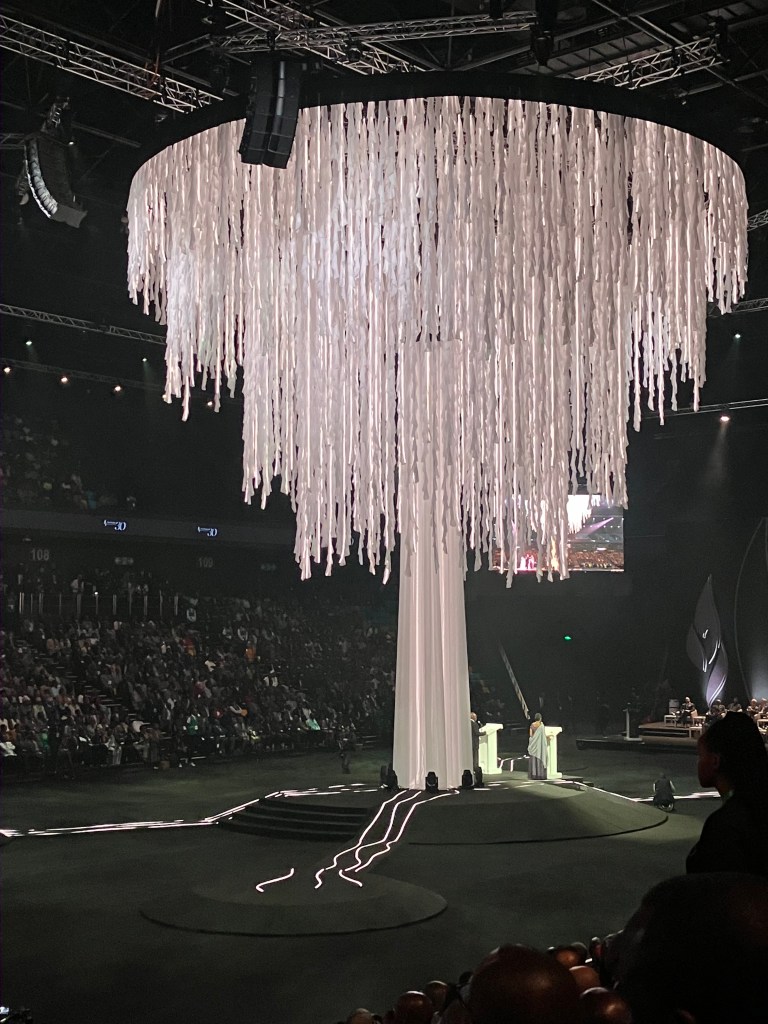
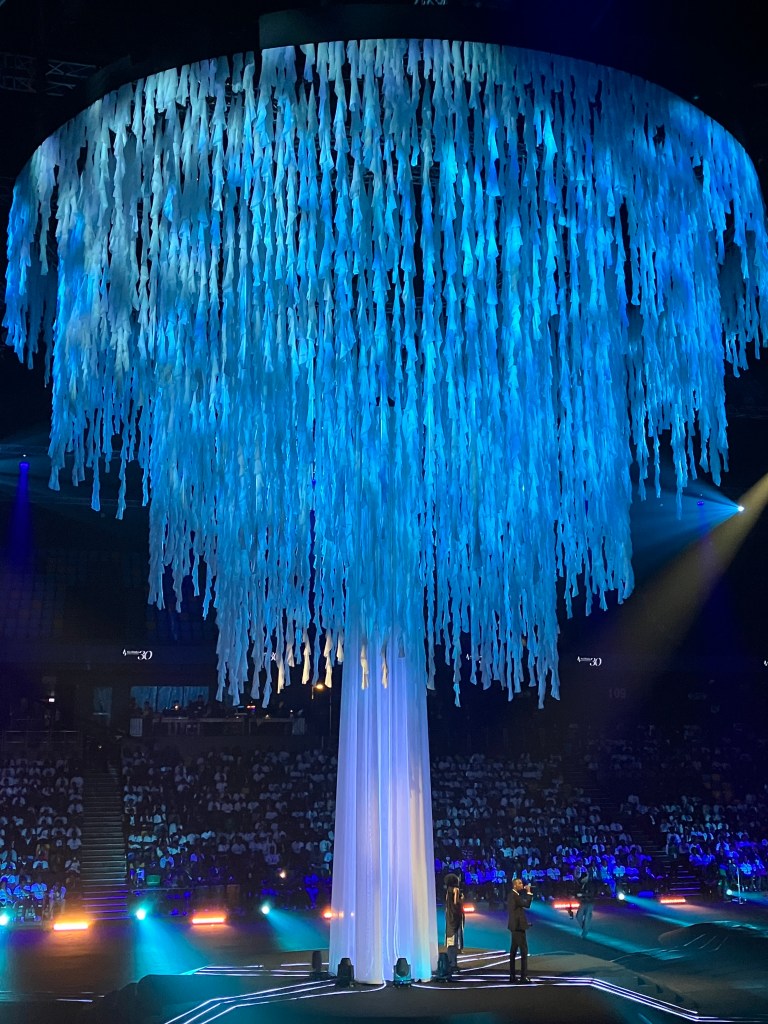
Kwibuka 30 Tree, which symbolises protection, aspirations, memory

It has been nearly a month since I attended Kwibuka in Kigali. The experience was truly unique as the main event, hosted at the BK Arena (as seen in the picture above), with speeches, dances and artwork that symbolised not only Rwanda’s horrific past but its desired future. While there are more experienced researchers focusing on commemorations (I highly suggest looking at the work done by Dr Samaantha Lakin), I decided to look back with my Political Science lenses. Baldwin, Longman, and others provide a more critical examination of Rwanda’s commemorations, so I decided to take a rather different approach to analysing this important event.


Rwandans are commemorating those who perished during the 1994 Genocide against the Tutsi. It has been thirty years since the Genocide ripped through Rwandan society, leaving up to a million Tutsi and non-extremist Hutus dead. This 100-day commemoration period, starting on April 7, the day which initiated the Genocide, witnesses Rwandan society remembering and reflecting on historical divisions between Tutsi, Hutu, and Twa. More importantly, it is a time for Rwandans to come together to promote unity and reconciliation under the banner of Ndi Umunyarwanda, loosely translated as ‘I am Rwandan’.

While it initially comes from Article 10 of the 2003 Constitution, its current policy iteration began in 2013 with the desire to foster national unity to prevent future divisionism and genocide.

The Rwandan government’s agency responsible for Kwibuka, the Ministry of National Unity and Civic Engagement (MINUBUMWE), will make this year’s commemoration a grand event as it is the thirtieth anniversary of the Genocide. Similarly to the twentieth commemoration, multiple international, national, and local events will be held with an eye on the neighbouring Democratic Republic of Congo (DRC) and the continuing social engineering of Ndi Umunyarwanda.  

Tensions with DRC:

The recent wave of violence in eastern DRC has become ever so worrying for Rwandans. In an attempt to defeat one of the multiple Congolese rebel groups dotting the landscape, the DRC’s military, the Armed Forces for the Democratic Republic of Congo (FARDC), have increasingly been cooperating with Rwanda’s primary external security threat, the Democratic Forces for the Liberation of Rwanda (FDLR). This Congolese-based rebel group are the remains of the genocide perpetrators of Rwanda’s Genocide who wish to re-establish ethnic divisions, outlawed by the Ndi Umunyarwanda policies of ethnic unity, and return the country to that of the Genocide. The increased cooperation between the two actors has led to Rwandan concerns about increased military supplies and political legitimacy given to the FDLR.

The true threat posed by the FDLR is not its ability to try to defeat the Rwandan Defence Forces (RDF) and retake the country. The perhaps 2000-strong FDLR force has little strategic, operational or tactical capabilities to control Rwanda from President Paul Kagame’s government. However, their genuine threat stems from their ideology.

Former RDF Chief of Staff and recently appointed Rwandan High Commissioner to Tanzania Patrick Nyamvumba commented on the FDLR’s threat to Rwanda’s ontological security. As I argue in my book, the danger is akin to a mosquito that cannot do much harm to an adult human. Instead, it is the malaria they carry, i.e. genocide ideology, which poses the threat. Many within the Rwandan government are fearful that not enough time has passed to foster a resilient post-genocide unified identity that can fully expel the tempting ideology which composes the FDLR. Whether this is true or not can be argued, but the threat remains in the minds of Rwandan policymakers.

The second threat posed by eastern DRC is the increasingly genocidal language coming from the Congolese government. Congolese President Felix Tshisekedi has already called President Kagame ‘Hitler‘, but more troubling is his government’s language and actions against the Banyamulenge population. This group historically originated from Rwanda but has resided in Congo for generations despite facing past persecution. Over the past two years, violence against them, often from the FARDC and their FDLR allies, has seen the return of the Movement of March 23 (M23) rebel force from its near decade of inaction. However, the language coming from the Congolese government is worrying Rwandan policymakers.

Congolese Minister of Higher Education Muhindo Nzangi and government Spokesman Patrick Muyaya Katembwe have openly called for the persecution of the Banyamulenge. One Rwandan policymaker commented that the language coming from Congolese officials reminded him of language used by Rwanda’s perpetrators just before the Genocide. With this level of genocide ideology just to the nation’s west, the question is how serious the threat is to Rwanda’s post-genocide social reconstruction of Ndi Umunyarwanda.

Combatting Genocide Ideology:

Since the National Commission for Unity and Reconciliation (NURC), the predecessor of MINUBUMWE, the Ndi Umunyarwanda, the Rwandan government has continued implementing this policy to foster ethnic unity among Rwandans. This ideology follows the governing Rwanda Patriotic Front’s (RPF) interpretation of Rwandan history, which upholds Tutsi, Hutu and Twa as a form of socio-economic division rather than rooted in ethnic differences. However, Western scholars such as Reyntjens, Des Forges and Newbury dismiss this interpretation of history. Nevertheless, they miss an essential aspect of why Ndi Umunyarwanda exists. It exists as a mechanism for the country to move on from its past divisions to formulate ethnic unity that will prevent the environment of social divisions that can lead to a repetition of the Genocide.

Many within the Rwandan government, especially in the inner circles of power, are those who either fought to end the Genocide or were victims of it. The deep-rooted scars of their experience influence their desire for national social re-engineering. Many are still nervous that the past Hutu extremist ideology that promoted divisionism and hatred, which the FDLR still promotes, can override the progress made by Ndi Umunyarwanda and return. The comfort of scapegoating others for one’s problems is often tempting. The language coming from the DRC is worrisome for Rwandan policymakers, as it not only threatens the Banyamulenge but also follows patterns that once and possibly again inflict on Rwandan society. At least in the capital city of Kigali, the conditions for social divisions seem relatively minimal.

During my most recent fieldwork periods in Rwanda (December 2022-March 2023 and August to September 2023), I paid particular interest in whether Ndi Umunyarwanda had taken hold in the new generation of Kigali’s residents. During a 2016 PhD fieldwork, some government officials commented that it would take a generation or two for social unity to be achieved in the form of Rwandans being unconcern of one’s family, possibly Tutsi, Hutu or Twa identity.

While conducting fieldwork, I attended multiple social gatherings with Kigali’s growing middle class of Rwandans between the ages of 24 and 35. During conversations with fifty Millennials and Gen Z, it appeared that the government’s wish for the youth’s acceptance of Ndi Umunyarwanda had been effective. All attendees had little desire to bring up what they classified as their ‘parent’s divisions’ and instead saw each other as fellow Rwandans. These conversations illustrate the success of Ndi Umunyarwanda and, more broadly, the Rwandan government’s desire for post-genocide social reconstruction.

What will Rwandans Commemorate?

With the thirtieth commemoration, Rwandans will continue to examine their history of how the nation descended into Genocide through divisionism. Rwandan embassies and high commissions have and are still engaging with the Rwandan diaspora, while local villages continue to have relatively simple events to remember the past and help foster a united future. They need not look far to see the warning signs of how society can slip into scapegoating and securitising each other can lead to violence. The increased violence and ethnic-based language in eastern DRC are a steadfast reminder of the importance of Ndi Umunyarwanda. While the physical threats from across the border cannot be dismissed, internally, Rwanda is closer to Ndi Umunyarwanda unity rather than genocide divisions.

Categories
Uncategorized

30 years after genocide: Rwanda’s older generations fear a return of ethnic tensions, but youth feel more united

Jonathan Beloff, King’s College London

It’s 30 years since a genocide ripped through Rwandan society, leaving up to a million Tutsi and non-extremist Hutu dead.

Every year in early April, the country enters a 100-day period of commemoration during which Rwandans are asked to remember and reflect on historical divisions between the country’s main ethnic groups: Tutsi, Hutu and Twa. This is done under the banner of Ndi Umunyarwanda, loosely translated as “I am Rwandan”.

This post-genocide unified ideology follows the governing Rwandan Patriotic Front’s interpretation of the country’s history. It views Tutsi, Hutu and Twa as a form of socio-economic division rather than being rooted in ethnic differences.

Some western scholars, such as Filip Reyntjens, Alison Des Forges and Catharine Newbury, dismiss this interpretation of history. They argue that ethnicity was always an important aspect of Rwandan society and not a colonial construct.

In my view, based on 16 years of research on Rwanda and its public policies post-genocide, they miss an essential aspect of why Ndi Umunyarwanda exists. It was designed as a mechanism for the country to move on from its past divisions and prevent a repeat of the genocide.

During recent fieldwork in Rwanda (December 2022 to March 2023 and August to September 2023), I paid particular attention to whether Ndi Umunyarwanda had taken hold in the new generation of Kigali’s residents. I attended multiple social gatherings with Kigali’s growing middle class of Rwandans between the ages of 24 and 35.

During conversations with 50 millennials and Gen Zs, it appeared that the government’s wish for the youth to accept Ndi Umunyarwanda had been effective. Attendees had little desire to bring up what they classified as their parents’ divisions and instead saw each other as fellow Rwandans.

In my view these conversations illustrate the success of Ndi Umunyarwanda and, more broadly, the Rwandan government’s desire for post-genocide social reconstruction.

But among Rwanda’s older generation, the fear of a resurgence of ethnic tensions remains alive. Many within the Rwandan government are concerned that not enough time has passed to foster a unified identity that can fully expel an ideology that wrought so much carnage.

In particular, the government is acutely sensitive to the activities of the militia group, the Democratic Forces for the Liberation of Rwanda, based in neighbouring Democratic Republic of Congo (DRC). The 2,000-strong armed force includes people known to have been perpetrators in the genocide.

The war on the border

In Kigali, there’s been growing nervousness about the wave of violence in eastern DRC. The Congolese army has been accused of cooperating with the Democratic Forces for the Liberation of Rwanda, which is made up of remnants of Rwanda’s past genocide forces.

This has driven Rwandan concerns about increased military supplies to the group, and it being given political legitimacy. However, the threat it poses doesn’t stem from its military capability – the group has little strategic, operational or tactical capabilities to defeat the Rwandan army and seize control from Paul Kagame’s government. Rather, its perceived threat stems from the views held by the people who make up the force.

These fears have been further stoked by the actions and language being used by officials in Felix Tshisekedi’s government against the Banyamulenge population. This group historically originated from Rwanda but has lived in the DRC for generations.

Over the past two years, violence against them – often from the DRC’s army and the Democratic Forces for the Liberation of Rwanda – has escalated.

The language coming from the Congolese government is worrying Rwandan policymakers. Congolese minister of higher education Muhindo Nzangi and government spokesman Patrick Katembwe, for instance, have openly called for the persecution of the Banyamulenge. Rwandan foreign minister Vincent Biruta has said the language of ethnic hatred against the Banyamulenge that’s coming from Congolese officials reminds him of the language used by perpetrators just before the 1994 genocide.

The language coming from the DRC is worrisome for Rwandan policymakers as it not only threatens the Banyamulenge, but also follows patterns that afflicted Rwandan society. But how serious is the threat to Rwanda’s post-genocide social reconstruction of Ndi Umunyarwanda?

Rwandans hold confidence in their government and military to protect them from security threats, including from the Democratic Forces for the Liberation of Rwanda. Nevertheless, the ideology these threats contain is seen as the primary risk of returning Rwanda to its past divisions.

In my view, this risk is rather low. But concern still remains within the government, as well as among those who experienced the genocide. Their memories of divisionism and ethnic-based hatred still influence their concerns of Rwandan security and its future.

Deep-rooted scars

Many within the Rwandan government, especially in the inner circles of power, either fought to end the genocide or were victims of it. The deep-rooted scars of their experience influence their desire for national social re-engineering.

Many are still nervous that the past Hutu extremist ideology that promoted divisions and hatred, which the Democratic Forces for the Liberation of Rwanda promotes, could override the progress made by Ndi Umunyarwanda. The comfort of scapegoating others for one’s problems is often tempting.

With the 30th commemoration, Rwandan embassies and high commissions will engage with the Rwandan diaspora. There will be national events in Kigali, but most will be held in local villages and towns to remember the past and help foster a united future.

They need not look far to see the warning signs of how society can slip into scapegoating and how this can lead to violence. The increased violence and ethnic-based language in eastern DRC are a steadfast reminder.

While the physical threats from across the border cannot be dismissed, internally Rwanda is closer to Ndi Umunyarwanda unity than genocide divisions.

Jonathan Beloff, Postdoctoral Research Associate, King’s College London

This article is republished from The Conversation under a Creative Commons license. Read the original article.

Categories
Uncategorized

Remembering the Campaign against Genocide War

On March 14th and 15th, I led a workshop at the Kigali Genocide Memorial examining how the Rwandan Patriotic Army (RPA) ended the Campaign against Genocide War. It was during April to July 1994 that the RPA fought military and genocide forces to put an end to the Genocide against the Tutsi. While the Genocide is perhaps one of the most well-studied subjects of Rwanda, how the genocidal massacres ended is less explored. How people survived often ends with the RPA coming and liberating a town, village or area from the genocide perpetrators.

The project, funded by the Arts and Humanities Research Council (AHRC), utilised Strategic Theory and Military Studies to examine and understand the different operations and tactics used by the RPA. Beyond a historical examination and week-to-week exploration of military combat, it crafts the strategy held by both the RPA and the Forces Armées Rwandaises (FAR). Interviews were collected from not only those who fought in the RPA but included the FAR. Additional interviews with genocide survivors and a perpetrator also helped foster a picture of the hundred days in Kigali. The interviews are not the only source, as they were triangulated with UNAMIR reports and existing scholarly material.

The research’s conclusions illustrate how the RPA’s central strategy was to end the Genocide. This differs from the works of Rwandan political critics and those with questionable ethical backgrounds, who accuse the RPA of not only igniting the Genocide but also helping fuel it with their massacres. However, their conclusions do not fit when understanding the RPA’s humanitarian and military operations and the tactics within those missions.

Operations and Tactics:

Humanitarian operations, often with just a squad (5-10) or platoon (15-20) of soldiers, focused on finding Rwandan survivors and bringing them to ‘safe zones’ that were already under the RPA’s control, such as Mt Rebero, Parliament (CND), Gisozi, SOS Children’s School and so on. Irregular or guerrilla tactics often aided in not just infiltrating genocide territory but to help remove Rwandans to the ‘safe-zones’ where they could later be taken out of the city and away from danger.

Military operations were critical in the war as the institutional power of the genocide, the akazu-dominated genocide interim government received support and space from the FAR. By the final days of April, any non-extremist FAR officers with influence had been removed, allowing those such as General Augustin Bizimungu and Colonel Théoneste Bagosora to promote the FAR’s engagement in the genocidal killings. This does not deny how some members of the FAR opposed the military’s involvement in the Genocide. Many of them joined the RPA after the war. However, the FAR was the military protection that protected the genocide actors, such as the Interahamwe, from the RPA. For the RPA to end the genocidal massacres, the FAR needed to be defeated. Military operations included irregular and conventional warfare encirclement tactics, with urban combat often utilised in Kigali.

If the RPA’s strategic goal consisted of only military victory, the humanitarian operations would either not occur or be the bare minimum akin to the Allied movements during World War Two. While the Soviets, US and British did liberate the concentration and extermination camps of Europe, their actions in helping survivors cannot be compared to the RPA. The RPA’s central focus was to save not Tutsis, Hutus or Twa but instead and, more importantly, Rwandans. RPA soldiers never asked for identity cards or ethnic identities during the operations. Military operations could even be harmed or overridden if there was a chance for a successful humanitarian operation. An example of this can be found before the Battle for Mt Rebero.

Mt Rebero from Parliament

Mt Rebero:

Under the command of Lt Colonel Jacob Tumwine, RPA commander of Eagle and Simba Companies, he received orders from RPA General (now President) Paul Kagame to take the tactically important hill of Mt Rebero. During the late hours of April 11th, Lt Colonel Tumwine led his 300-man army, not nearly enough for the military operation, from the Parliament, the headquarters of the RPA’s 3rd Battalion, through the neighbourhoods of Gikondo and Kicukiro and up the southern hill. Unbeknownst to them, Belgian peacekeepers had previously abandoned the nearby Ecole International School (ETO). With FAR support, Interahamwe led a death march of over 2000 Rwandans up to Nyanza Hill to be slaughtered. By the morning of April 12th, Lt Colonel Tumwine’s scouts found the site of a massacre.

Thousands of bodies lay dead, with a hundred or so survivors beginning for help. The Interahamwe had departed the area as night fell and planned their return to finish off the remaining victims in the morning. Lt Colonel Tumwine was confronted with a difficult choice. Does he help the survivors or not? Helping the survivors required leaving behind much-needed soldiers to guard them until they could be taken to safety. But Lt Colonel Tumwine barely had enough soldiers for the upcoming battle at Mt Rebero. If he chose to bring the survivors with him, he would lead them to a battlefield. The final choice was to leave them to their fate. But Lt Colonel Tumwine remembered the RPA’s strategy to ending the Genocide. He could not leave these survivors behind or put them in a position of harm. Thus, he left a platoon of soldiers behind, including one of his right-hand men, to protect them from genocide forces until they could be taken out of the area.

His decision could have harmed the success of the military operation to take Mt Rebero. However, he would have violated the RPA’s central strategic goal if he did not help the survivors. This type of decision was not a one-off event, as nearly every soldier in the RPA faced this decision at one point or another, and it often occurred multiple times until the war ended.

Conclusion:

How the Genocide against the Tutsi ended is essential in understanding Rwandan history. Rwanda must remember how the battles, operations and decisions during the Campaign against Genocide War ended the Genocide. Throughout conducting this research, Rwandans often came and asked questions. They want to know how the Genocide ended beyond just the RPA won. They wish to know how the RPA did it and who led the specific operations in their neighbourhoods. How the RPA ended the Genocide against the Tutsi could only have occurred with its strategy of ending the Genocide. At the same time, the FAR, Interahamwe, akazu and their allies wished to promote the massacres.

It was a privilege to interview many of those who ended the Genocide. It was fascinating to talk to and interview those who fought for the FAR but knew the evils that too many of their comrades were doing. Even those seemingly powerless to stop their commanders refused to engage in the massacres. Some resisted in whichever way they could by saving a few Rwandans when they could or resisting orders to kill Tutsis. Rwandans want and need to know about their history. In the near future, the collected data will be released with the support of the Kigali Genocide Memorial and as a book published by Lexington Books.

Categories
Uncategorized

Faustin Twagiramungu: A Dinosaur of Rwandan Politics Long Gone

On 2nd December 2023, the news broke on social media that Rwanda’s former Prime Minister Faustin Twagiramungu died in Belgium. While most Global North-based activists mourn his loss and make somewhat questionable claims of him being a ‘symbol of democracy’ for Rwanda, his loss in Rwanda will go relatively unnoticed. This brings up an interesting question of what happened to Twagiramungu in the consciousness of not just the Rwandan public but the new generation of Rwandans whose lives consist mainly after the Genocide against the Tutsi. Global North social activists will answer how minor mention of his death in Rwanda originates from President Paul Kagame or the Rwanda Patriotic Front (RPF). However, that is problematic as it does not reflect the realities in Rwanda.

Who Was Faustin Twagiramungu?

Born in 1945 in Cyangugu Province, Twagiramungu lived a relatively everyday life for a Rwandan Hutu. Since independence in 1962, Rwanda’s social norms favoured the majority Hutu (composing roughly 84% of the population) over the minority Tutsi (comprising approximately 15%) and the minority Twa (comprising less than 1%). The previous 1959 Hutu Revolution, promoted by the nation’s first post-colonial President, Grégoire Kayibanda, glorified Hutu supremacy. Mass pogroms led to thousands of Tutsi to flee into neighbouring countries. Over the coming years, anti-Tutsi pogroms left thousands dead and tens of thousands to flee into neighbouring countries. During the First Republic (1962-1973), southern Hutus, such as Twagiramungu, received economic, political and societal favouritism. However, he did not receive the benefits of his ethnic and geographical origins for long as he studied and worked in Canada starting in 1968 and continued until 1976. It was during the reign of General Juvénal Habyarimana, who overthrew Kayibanda in a coup d’état that he returned to run a transportation company called Société des Transports Internationaux au Rwanda (STIR).

His business success outstripped his now disenfranchised origins. President Habyarimana and his inner circle called the akazu, loosely translated as ‘little house’, shifted favouritism from the South to the North. Tutsis still experienced institutional racism, nonetheless. The geographical power shift and anger towards the President led him into politics. However, Rwanda’s political landscape was changing. The one-party dictatorship of Habyarimana began to loosen. As Kroslak writes, Rwanda and many African nations under the French’s sphere of influence started a ‘Paristroika’ moment. With the Cold War ending and Western capitalism winning the ideological war, the Western donor nations of the United States, France and Great Britain demanded political and economic liberalisation. This new movement became an opportunity for Twagiramungu.

The Beginning of his Political Career and the Genocide against the Tutsi:

In 1991, he became a prominent Mouvement Démocratique Républicain (MDR) member. While MDR attempted to differentiate itself from Habyarimana’s party, the Mouvement Révolutionaire National pour le Développement (MRND), by claiming it was the ideological successor of former President Kayibanda and his lost political party, the Parti du Mouvement de l’Emancipation Hutu (Parmehutu) were banned and dissolved shortly after Habyarimana’s coup. Additionally, MDR softened its tone on Tutsis compared to its predecessor. But like many of Rwanda’s new political parties, there were significant divisions based not only on Rwanda’s Tutsi population but also on whether to engage with the RPF.

In October 1990, the RPF’s military wing, the Rwandan Patriotic Army (RPA), crossed from Uganda to attack the Rwandan military, the Rwandan Armed Forces (FAR). The beginning of the Liberation War (1990-1993) began with initial setbacks for the RPA. Successful tactics and offensives in 1991, 1992 and 1993 led to peace negations and political transformations. By August 1993, the RPF and the Habyarimana regime agreed upon the Arusha Accords. The akazu lost significant power as Rwanda’s political system broadened beyond the original ‘Paristroika’ of the early 1990s to include the RPF. This benefited Twagiramungu’s career and ambition.

Including the RPF in Rwanda’s political space led to President Habyarimana being much more tactical in engaging with the opposition parties. He used wealth, favours and threats to divide political parties. The MDR was no different, especially after the forced exile of MDR leader and Prime Minister Dismas Nsengiyaremye in July 1993. His favouritism towards working with the RPA led him to be seen as an ‘accomplice’ by the FAR and Habyarimana. While Twagiramungu would be the ideal replacement, he instead manoeuvred for Agathe Uwilingiyimana, a moderate within the party, for the Prime Minister position. She would later die during the Genocide against the Tutsi. It is important to note that while MDR had its moderates, it also had its Hutu extremists, such as Jean Kambanda, who would become Rwanda’s Prime Minister during the Genocide against the Tutsi.

On the night of 6th April 1994, the Falcon-50 Presidential Plane carrying President Habyarimana was shot down, most likely by FAR extremist actors, igniting the Genocide against the Tutsi. Twagiramungu resided in Kigali and received help from the United Nations Assistance Mission in Rwanda (UNAMIR), who brought him and his family to safety at their base in Kissimenti. Prunier, Dallaire and Anyidoho write of how UNAMIR forces, rather than the better equipped RPA, who had previously stationed its 3rd Battalion (more popularly known as the 600), rescue Twagiramungu’s life. There is speculation that he did not want to be saved by the RPA in order to retain the image of independence from the RPF, unlike Nsengiyaremye. Whatever the reason, he did not want RPA assistance; nevertheless, he benefited from their protection at Amahoro Stadium. Shortly after the Genocide began, the RPA’s 3rd Battalion, under the command of Lt. General Charles Kayonga, sent Eagle Company to Amahoro Stadium, which housed UNAMIR’s headquarters, to protect it from military and genocidal forces. The Genocide ended when the RPA defeated and removed the genocide regime on the 18th of July 1994. The Campaign against Genocide War had ended, but Rwanda’s landscape dramatically changed.

After the Genocide:

Despite winning the war, the RPF kept much of the previous 1993 Arusha Accords in place. There were changes, such as the Hutu extremist parties that were once in the government would be banned. Their political seats and ministries were distributed to other parties but mostly RPF. While there were only minor changes in the new post-genocide transitional government compared to the one agreed upon in the Accords, Rwanda had changed. During the first few days of the Genocide against the Tutsi, non-extremist, politically active Hutus were targeted alongside Tutsis by genocide forces. The political party’s divisions, which President Habyarimana created within many oppositional parties, provided opportunities for extremist elements to kill off moderate party members during that first week. Many of the extremist political party members were either dead or fled the country. Thus, few oppositional leaders left when the war and Genocide was over. Twagiramungu was one of the lucky few.

In accordance with the Arusha Accords, the MDR retained the Office of the Prime Minister. Twagiramungu, being one of the few remaining MDR members, became the nation’s new Prime Minister. While he had hoped the position would grant him political favour, he did not realise how the political landscape had changed. Unlike the early 1990s, Rwanda was now under the control of the RPF, which had just ended the Genocide against the Tutsi and won the Campaign against Genocide War. They suffered the least in terms of lost political leaders. However, they were not immune to the political changes that had taken place. Kimonyo writes how, during the remaining 1990s, some RPF officials wanted to rule the country as the past presidents had done. This is not in reference to a political dictatorship but the style of politics and corruption that had existed before. The infighting, corruption and ineptness led to not only the removal of Rwanda’s post-Genocide President Pasteur Bizimungu in 2000 but a significant shakeup in the party and country. Vice-President and Minister of Defence Paul Kagame became the next President and de facto leader of the RPF.

Even before the constitutional changes in 2000, which included some of the first legislation to ban ethnic divisionism, the political system was considerably different than what Twagiramungu had hoped. The 1995 Kibeho Massacre, along with a diminished role in policymaking, led Twagiramungu to speak out against the post-Genocide government. He increasingly claimed that Hutus within the government were either puppets or their ethnic concerns were ignored. Recall that Twagiramungu grew up in Rwanda’s ethnic divisions, which had always not only favoured Hutus but acknowledged ethnic partitions. This radically differed from the RPF’s desired social belief, which dismissed ethnic divisionism to foster the unifying social norm of Ndi Umunyarwanda, loosely translated as ‘I am a Rwandan.’ While the policy would come into existence years later, the institutional foundation for social unity began shortly after the installation of the post-Genocide government.

Twagiramungu resigned as Prime Minister on 28th August 1995. He claimed it was a result of the Kibeho Massacre. However, this is not the whole answer, as he would never have longed for this new political landscape. Unlike those such as the current Minister of Foreign Affairs Vincent Biruta, a member of the Parti Social Démocrate (PSD) and saved by the RPA’s 3rd Battalion during the Genocide, he still felt that the pre-Genocide political atmosphere of Rwanda still existed. Fundamentally, it was gone, and he became somewhat of a dinosaur of a past political environment that no longer existed. The RPF were the winners of the Liberation and Campaign against Genocide War and thus set the tone for Rwanda’s political system. Even that system did not last long as by 2000, Paul Kagame began his Presidency, which continues until today. Rwanda’s political landscape would never return to the early 1990s.

Life outside Rwanda:

Twagiramungu departed Rwanda for Belgium in March 1996. It was there he created the oppositional party, Democratic Forces for Resistance, in 1997. Working with other exiled movements and former political leaders of the Habyarimana regime, he tried to mount a serious campaign against the RPF. However, there would be little hope for proper coordination as the widely different political parties, each holding various beliefs, never unified.

Despite Twagiramungu’s lack of recognition of the shifting political landscape and greatly diminished role for him and his party, he nevertheless attempted to run for President as an Independent during the 2003 Presidential Elections. His platform focused on economic issues and questioned the RPF’s social messages. He ran as an Independent as the MDR party became banned months before the election. The Rwandan government responded that its ban resulted from continued belief in ethnic divisionism. However, some members formed a new party, the Party for Progress and Concord (PPC), which currently has one representative in the Chamber of Deputies. As expected, Twagiramungu lost the election to President Kagame, winning just under 140,000 votes compared to his opponent, who won over 3.5 million. While international observers claimed election interference, there was little chance for Twagiramungu to win the election.

By 2003, Rwanda’s political landscape had changed again. President Kagame was now in control, and the nation would see changes towards economic growth, increased access to education and healthcare, and what Rwandans tell me is their most pressing concern: security. The political dynamics found in Rwanda in the early 1990s were now impossible to recreate. Additionally, Rwandans became somewhat sceptical of Western constructs of political liberalisation, which was perceived as a reason for Hutu extremist parties and actors gaining the power to conduct the Genocide against the Tutsi. Political landscapes had changed not just in Rwanda but throughout central and eastern Africa.

Despite the seeming rejection of Twagiramungu in 2003, it did not end his political ambitions. He formed the Rwandan Dream Initiative (RDI) in 2010. He later combined the party with others, including the Democratic Republic Liberation for Rwanda (FDLR), which contains remnant genocide forces, to form the Coalition of Political Parties for Change (CPC). The CPC’s inclusion of the FDLR is highly problematic as the Hutu extremist rebel force in eastern Congo holds policies containing Rwanda’s return to ethnic divisionism and ‘finishing’ the Genocide. The party collapsed within a year, but he remained President of the RDI party. However, he continued to be accused of being aligned with the FDLR’s genocide ideology. Until his final days, Twagiramungu continued to be active on social media, criticising the Rwandan government President Kagame and denying important facts about the Genocide against the Tutsi. He became an advocate of the false ‘Double Genocide’ theory, which claims the RPA committed their Genocide.

Twagiramungu’s Significance Today?

Twagiramungu’s recent passing holds little significance in Rwanda. Most Rwandans I talked to while conducting fieldwork either knew little about him (just that he was a Prime Minister and critic of the government) or were not interested. He is seen as a relic of the past or a historical footnote who did not adapt to Rwanda’s shifted political landscape. He also offered little to Rwandans who were satisfied with the status quo under the RPF. The stability the RPF brought to Rwanda should not be so easily dismissed. Rwandan informants often comment on how Global North critics live a privileged life of security, which leads to the great benefit of not knowing what it seriously means to have their lives at risk. The political luxuries in the Global North take time to develop, with most Rwandans expressing their satisfaction with the political stability even if it is not perfect.

Twagiramungu and his oppositional political successors, such as Victoire Ingabire Umuhoza, try to operate within a Rwandan landscape that does not exist anymore. Most Rwandans, especially the growing Millennial and Generation Z population, are not interested in the political pluralism in the Global North or Rwanda during the early 1990s. While critics of the Rwandan government will quickly dismiss this notion, their voices do not represent the ones residing in Rwanda. Rwandans frequently express their views of Rwandan politics to me, often with many complaints from local officials or scandals. However, very few want President Kagame to be replaced. Instead, many express their concerns if President Kagame steps down in the near future.

Twagiramungu, Victoire Ingabire and others see Rwanda through the lens of the early 1990s rather than Rwanda in 2023. This is why their political impact on Rwanda will remain negligible at best.

Categories
Uncategorized

DRC elections: the Kabila family legacy looms large over the country’s polls

Jonathan Beloff, King’s College London

The Democratic Republic of Congo is expected to hold elections on 20 December 2023. The country’s electoral commission has announced President Felix Tshisekedi will be seeking reelection alongside 23 other candidates. They include Nobel Peace Prize winner Denis Mukwege and the runner-up in the 2018 presidential election, Martin Fayulu. The courts will confirm the final list of candidates. One key political figure has yet to make his intentions known: Joseph Kabila. He was president for 18 years until Tshisekedi took over in 2019. The DRC’s constitution allows two five-year terms, but he remained in power by delaying elections. He holds substantial political, military and business sway. Jonathan R. Beloff is a political scholar who researches the politics and security of the Democratic Republic of Congo, Rwanda, Burundi and Uganda. We asked him some questions.

What is the Kabila family’s place in the DRC’s politics?

Joseph Kabila was the country’s fourth president. He took office after the assassination of his father, Laurent Kabila, who was killed by his bodyguard in 2001. Joseph later won presidential elections in 2006 and 2011.

The surprise 2018 election of Felix Tshisekedi, who took power in January 2019, as president interrupted more than two decades of the Kabila family’s rule. At the time, Joseph was constitutionally barred from running for president – and he had already overshot his second term by more than three years.

The Kabila family became a political powerhouse after gaining control in 1996. With the assistance of other countries – such as neighbours Uganda, Angola and Rwanda – the Alliance of Democratic Forces for the Liberation of Congo, under the leadership of Laurent Kabila, overthrew the long-standing Zairian dictator, Mobutu Sese Seko. This was during the First Congo War (1996-1997).

Laurent’s tenure was riddled with ineffectiveness and corruption. In less than two years, he had dismissed his minister of defence, the Rwandan James Kabarebe, and begun arming anti-Rwandan forces. These forces contained actors who participated in the 1994 genocide against the Tutsi in Rwanda.

Laurent claimed his government only backed these forces after Rwanda attempted to overthrow his regime.

The bloody Second Congo War (1998-2003) led to at least two million deaths, many of them from disease and extreme poverty rather than warfare itself. While Kabarebe’s invasion attempt on the capital Kinshasa in 1998 failed, the vast DRC was divided into spheres of influence for different nations and their aligned rebel groups. This status quo only began to break after Laurent’s assassination, which led to the rise of his son Joseph.

Joseph learned military strategy, tactics and politics under Kabarebe. The two worked together after the Second Congo War to flush out many anti-Rwandan forces. This included the Democratic Forces for the Liberation of Rwanda. They also campaigned together during the 2011 presidential elections, which Joseph won.

Joseph initially cast himself as a reformer who would end the Second Congo War and pursue policies to spur political and economic development. However, instability in eastern Congo persisted under his rule, with accusations of massive corruption that undermined the nation’s development.

How much sway does Joseph Kabila hold today?

Joseph Kabila remains a strong presence within Congo’s political, economic and military institutions. He has strong networks developed over 18 years in power. He could use this influence to sway the vote towards any of the candidates.

His influence stems from favourable business and political alliances he created when he was president. Like Mobutu, Kabila used his vast financial resources to secure favourable relationships with Congolese and foreign business leaders. A document leak in 2021 revealed that Kabila received over US$138 million from corruption and bribes.

There were claims that the former president originally convinced Tshisekedi to accept a power-sharing agreement. Under it, Tshisekedi would be president, while Kabila would control political decisions behind the scenes. The near appointment of Ronsard Malonda as the president of the electoral body illustrated Kabila’s political influence. Malonda held senior positions during the country’s 2006, 2011 and 2018 elections. He has been accused of rigging results in favour of Kabila.

Such accusations have benefited Tshisekedi’s election campaign. He is depicting himself as a candidate not tied to the corruption within DRC.

If Kabila does decide to campaign, political dynamics within much of Congo’s civil society, military and economy will be divided. Government ministers and officials will be forced to choose to support either the incumbent or Kabila’s preferred candidate.

What was Tshisekedi expected to change after he routed Joseph Kabila?

There was initial hope that Tshisekedi’s government would foster peace in eastern Congo, establish greater national unity and help solve the nation’s economic woes after decades of corruption and conflict. However, these problems have persisted.

Initially, Amnesty International praised Tshisekedi for pardoning political prisoners and allowing greater public space for criticisms of the Congolese government. He also began investigations on past mineral deals during the Kabila governments. As the African Union chair from 2021 to 2022, he pushed for greater attention to the COVID-19 pandemic and promoted the African Continental Free Trade Area.

Despite initial attempts to foster more significant relations with Rwanda, relations soured in 2022. This was after the Congolese government accused Rwanda of supporting the resurrected M23 rebels.

Rwanda denied the allegations. It has also accused Tshisekedi’s government of being hostile to the Congolese Tutsi population – the Banyamulenge – who are historically related to Rwandans.

The US Department of State has expressed concern about Tshisekedi’s anti-Banyamulenge rhetoric, as well as democratic transparency in the upcoming election.

Tshisekedi’s campaign strategy seems to focus on promoting security in eastern DRC by not only defeating the M23, but also attacking Rwanda for interfering in Congolese affairs. The securitisation of the Banyamulenge and Rwanda – the political manipulation to stir public fear – has helped deflect internal criticisms of the Tshisekedi regime.

Whether the elections take place is another area of concern. There are concerns that Tshisekedi will delay or cancel the election by citing security concerns. If this happens, it might be perceived by domestic and international partners as political interference by the ruling regime.

Jonathan Beloff, Postdoctoral Research Associate, King’s College London

This article is republished from The Conversation under a Creative Commons license. Read the original article.