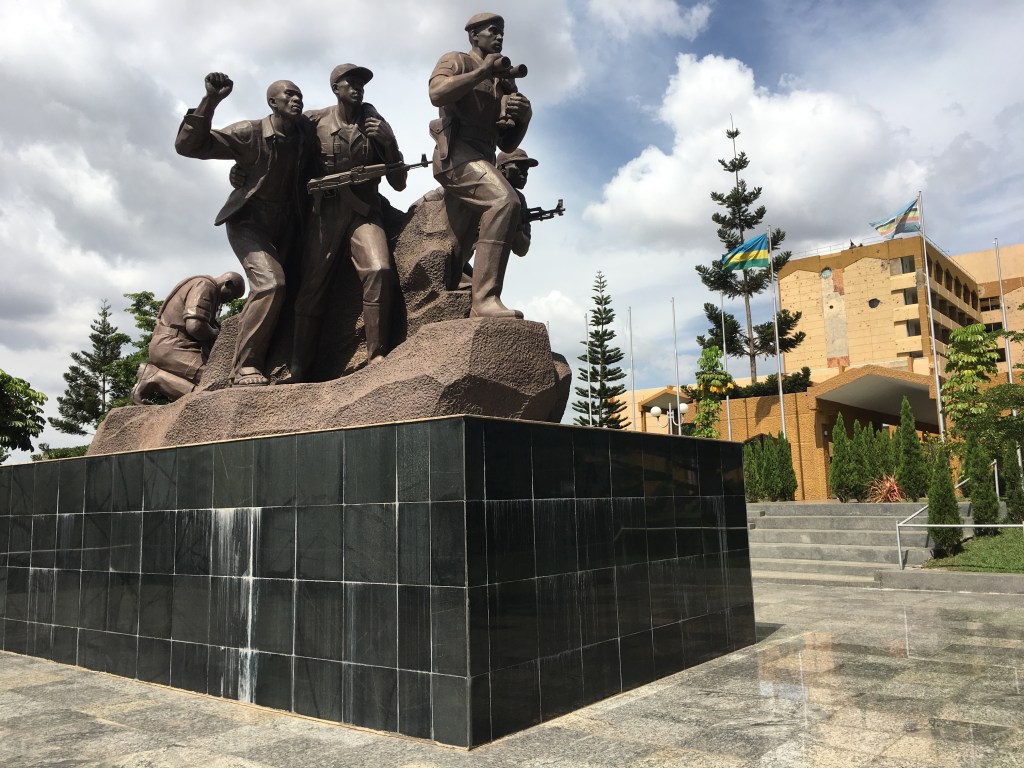
On March 14th and 15th, I led a workshop at the Kigali Genocide Memorial examining how the Rwandan Patriotic Army (RPA) ended the Campaign against Genocide War. It was during April to July 1994 that the RPA fought military and genocide forces to put an end to the Genocide against the Tutsi. While the Genocide is perhaps one of the most well-studied subjects of Rwanda, how the genocidal massacres ended is less explored. How people survived often ends with the RPA coming and liberating a town, village or area from the genocide perpetrators.
The project, funded by the Arts and Humanities Research Council (AHRC), utilised Strategic Theory and Military Studies to examine and understand the different operations and tactics used by the RPA. Beyond a historical examination and week-to-week exploration of military combat, it crafts the strategy held by both the RPA and the Forces Armées Rwandaises (FAR). Interviews were collected from not only those who fought in the RPA but included the FAR. Additional interviews with genocide survivors and a perpetrator also helped foster a picture of the hundred days in Kigali. The interviews are not the only source, as they were triangulated with UNAMIR reports and existing scholarly material.
The research’s conclusions illustrate how the RPA’s central strategy was to end the Genocide. This differs from the works of Rwandan political critics and those with questionable ethical backgrounds, who accuse the RPA of not only igniting the Genocide but also helping fuel it with their massacres. However, their conclusions do not fit when understanding the RPA’s humanitarian and military operations and the tactics within those missions.
Operations and Tactics:
Humanitarian operations, often with just a squad (5-10) or platoon (15-20) of soldiers, focused on finding Rwandan survivors and bringing them to ‘safe zones’ that were already under the RPA’s control, such as Mt Rebero, Parliament (CND), Gisozi, SOS Children’s School and so on. Irregular or guerrilla tactics often aided in not just infiltrating genocide territory but to help remove Rwandans to the ‘safe-zones’ where they could later be taken out of the city and away from danger.
Military operations were critical in the war as the institutional power of the genocide, the akazu-dominated genocide interim government received support and space from the FAR. By the final days of April, any non-extremist FAR officers with influence had been removed, allowing those such as General Augustin Bizimungu and Colonel Théoneste Bagosora to promote the FAR’s engagement in the genocidal killings. This does not deny how some members of the FAR opposed the military’s involvement in the Genocide. Many of them joined the RPA after the war. However, the FAR was the military protection that protected the genocide actors, such as the Interahamwe, from the RPA. For the RPA to end the genocidal massacres, the FAR needed to be defeated. Military operations included irregular and conventional warfare encirclement tactics, with urban combat often utilised in Kigali.
If the RPA’s strategic goal consisted of only military victory, the humanitarian operations would either not occur or be the bare minimum akin to the Allied movements during World War Two. While the Soviets, US and British did liberate the concentration and extermination camps of Europe, their actions in helping survivors cannot be compared to the RPA. The RPA’s central focus was to save not Tutsis, Hutus or Twa but instead and, more importantly, Rwandans. RPA soldiers never asked for identity cards or ethnic identities during the operations. Military operations could even be harmed or overridden if there was a chance for a successful humanitarian operation. An example of this can be found before the Battle for Mt Rebero.
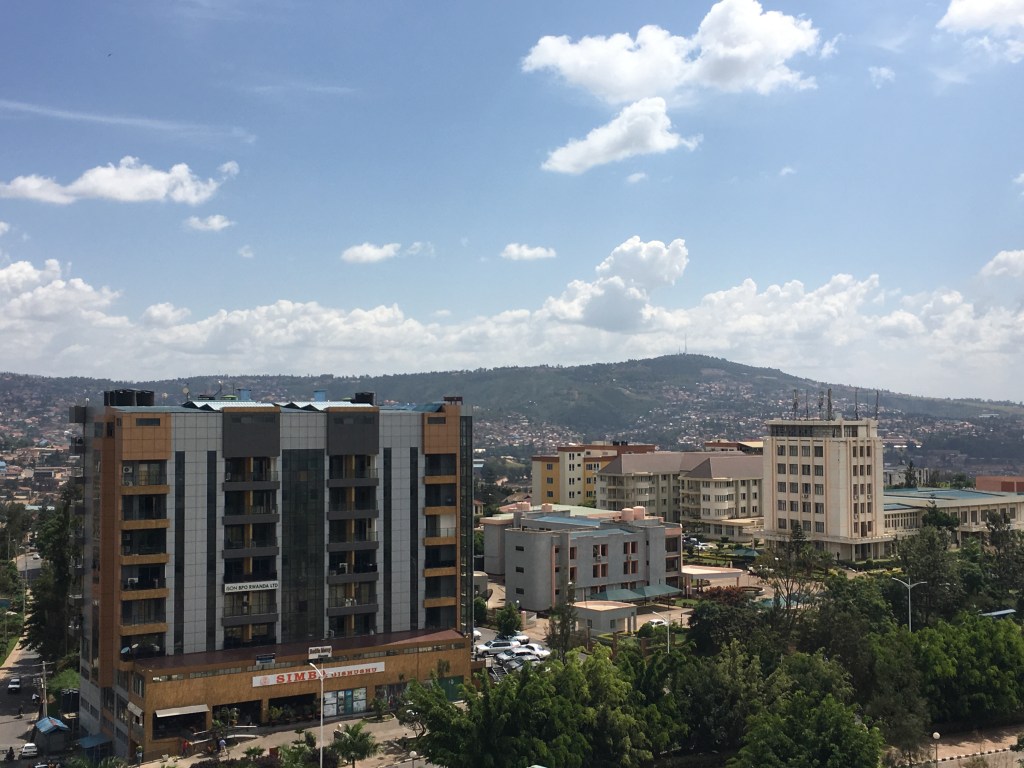
Mt Rebero from Parliament
Mt Rebero:
Under the command of Lt Colonel Jacob Tumwine, RPA commander of Eagle and Simba Companies, he received orders from RPA General (now President) Paul Kagame to take the tactically important hill of Mt Rebero. During the late hours of April 11th, Lt Colonel Tumwine led his 300-man army, not nearly enough for the military operation, from the Parliament, the headquarters of the RPA’s 3rd Battalion, through the neighbourhoods of Gikondo and Kicukiro and up the southern hill. Unbeknownst to them, Belgian peacekeepers had previously abandoned the nearby Ecole International School (ETO). With FAR support, Interahamwe led a death march of over 2000 Rwandans up to Nyanza Hill to be slaughtered. By the morning of April 12th, Lt Colonel Tumwine’s scouts found the site of a massacre.
Thousands of bodies lay dead, with a hundred or so survivors beginning for help. The Interahamwe had departed the area as night fell and planned their return to finish off the remaining victims in the morning. Lt Colonel Tumwine was confronted with a difficult choice. Does he help the survivors or not? Helping the survivors required leaving behind much-needed soldiers to guard them until they could be taken to safety. But Lt Colonel Tumwine barely had enough soldiers for the upcoming battle at Mt Rebero. If he chose to bring the survivors with him, he would lead them to a battlefield. The final choice was to leave them to their fate. But Lt Colonel Tumwine remembered the RPA’s strategy to ending the Genocide. He could not leave these survivors behind or put them in a position of harm. Thus, he left a platoon of soldiers behind, including one of his right-hand men, to protect them from genocide forces until they could be taken out of the area.
His decision could have harmed the success of the military operation to take Mt Rebero. However, he would have violated the RPA’s central strategic goal if he did not help the survivors. This type of decision was not a one-off event, as nearly every soldier in the RPA faced this decision at one point or another, and it often occurred multiple times until the war ended.
Conclusion:
How the Genocide against the Tutsi ended is essential in understanding Rwandan history. Rwanda must remember how the battles, operations and decisions during the Campaign against Genocide War ended the Genocide. Throughout conducting this research, Rwandans often came and asked questions. They want to know how the Genocide ended beyond just the RPA won. They wish to know how the RPA did it and who led the specific operations in their neighbourhoods. How the RPA ended the Genocide against the Tutsi could only have occurred with its strategy of ending the Genocide. At the same time, the FAR, Interahamwe, akazu and their allies wished to promote the massacres.
It was a privilege to interview many of those who ended the Genocide. It was fascinating to talk to and interview those who fought for the FAR but knew the evils that too many of their comrades were doing. Even those seemingly powerless to stop their commanders refused to engage in the massacres. Some resisted in whichever way they could by saving a few Rwandans when they could or resisting orders to kill Tutsis. Rwandans want and need to know about their history. In the near future, the collected data will be released with the support of the Kigali Genocide Memorial and as a book published by Lexington Books.
 Jonathan R Beloff