Categories
Uncategorized

DRC and Rwanda sign a US-brokered peace deal: what are the chances of its success?

Jonathan Beloff, King’s College London

The foreign ministers of Rwanda and the Democratic Republic of the Congo (DRC) signed a new peace agreement on 27 June 2025 under the auspices of the US.

The agreement aims to foster long-term peace, and increased economic trade and security. The DRC is one of Africa’s largest nations, with over 110 million people. Rwanda has a population of 14 million.

After three decades of war and tensions between the two neighbours since the aftermath of the 1994 Genocide against the Tutsi, the hope is that this agreement will establish the foundations for progress that benefits both nations.

It was the Donald Trump administration’s moment to illustrate the effectiveness of its “transactional” foreign policy, focused on exchanges and short-term benefits for each actor.

Most of the agreement’s details remained undisclosed until its signing. One aspect that’s surfaced was the claim that the DRC abandoned its demand for the removal of Rwandan soldiers from its territory. The Congolese government, research groups and the UN have accused Rwanda of supplying military aid, including soldiers, to the March 23 Movement (M23), which has been at war with the government in Kinshasa since 2021. The Rwandan government denies any active involvement but has some sympathies for the Congolese rebel group.

Under the June 2025 agreement, each side provided concessions and demands that are perhaps easier said than done. Both countries also want to show the Trump administration their willingness to negotiate and make a deal. This is in the hopes of future deals with the US, which Trump has remained vague on.

The DRC has immense mineral wealth, including gold, diamonds, tungsten, coltan, tin and lithium. These latter minerals are used in computer chips, batteries and other technologies.

The question is whether this latest agreement will lead to peace in the DRC. The likely answer is no, based on research on instability in the eastern DRC, Rwandan foreign policy and the security and political dynamics between Rwanda and the DRC for over 15 years.

This is mainly because

  • key players involved in the crisis were left out of negotiations
  • no provisions are made for enforcement
  • the opportunities for US companies remain questionable given the lack of security in the mining regions.

The roots of the crisis

After the 1994 Genocide against the Tutsi, former genocide perpetrators used the DRC’s vast size as cover to plan attacks on Rwanda. They intended to return to Rwanda to finish the genocide. The consequences led to the First Congo War (1996-1997) and the Second Congo War (1998-2003).

It was during the bloody Second War that the DRC was carved up by multiple rebel groups aligned with various nations and political actors. The UN accuses Rwanda and Uganda of carrying out a massive illegal mineral trade. Both nations deny this.

The consequences of the conflict are still felt over 20 years later. Despite multiple peace agreements, and disarmament, demobilisation and reintegration programmes, an estimated 120 rebel groups remain active in the Congo.

One of them, the Democratic Forces for the Liberation of Rwanda (FDLR), aims to return Rwanda to ethnic division and the genocide. The Rwandan government fears the group’s genocide and hate ideology.

Additionally, the FDLR and other extremist actors such as Wazalendo target the Banyarwanda. This ethnic group, residing primarily in eastern DRC, is historically related to Rwanda. It has been the target of attacks, which have forced tens of thousands of people to flee into Rwanda.

These attacks led to the resurrection of the M23. Despite its failures in 2013, the M23 scored major advances in late 2021 in response to attacks on the Banyarwanda. The rebel group led a successful military campaign that occupied large swathes of territory in eastern DRC.

Their success is largely attributed to the Rwandan Defence Forces, despite Kigali denying this claim.

Concessions from each nation

The latest peace agreement addresses the security, political and economic interests of both nations.

The specifics are still unavailable. However, several assumptions based on the framework and leaked reports can be made.

The first is that both nations must respect each other’s territorial sovereignty and stop aiding rebel forces. This will include joint security coordination, and working with the existing UN peacekeeping mission. Additionally, Congolese refugees who fled eastern DRC – estimated to be over 80,000 – will be allowed to return. Finally, the two nations will establish mechanisms to foster greater economic integration.

The DRC has also signalled its willingness to attract American investors. DRC’s vast mineral wealth remains largely underdeveloped. American investment could develop mining that’s safer and extracts larger amounts of minerals than current methods. Kinshasa has also agreed to combat corruption and simplify the tax system.

While most of these incentives would be aimed at mineral extraction companies, they also include private security firms. The Congolese military’s inability to defeat the M23 highlights a problematic security environment that some in the DRC believe can be addressed through foreign intervention. However, these security guarantees are still relatively unknown and face complications that could affect the success of any agreement.

The weaknesses

There are a number of reasons this latest agreement is unlikely to lead to peace.

First, the M23 did not participate in the negotiations. Given that they are the primary military actor in eastern DRC, their commitment to a peace process cannot be guaranteed.

Second, other rebel forces in different parts of the country will feel left out too. They could see this agreement as an opportunity to press for greater concessions from the Congolese government.

Third, there are few mechanisms to enforce the agreement. Since the Second Congo War, there have been multiple treaties, agreements and disarmament programmes with little success. The Pretoria Accord between Rwanda and the DRC in 2002 did not lead to long-term peace. The M23’s name is a nod to their anger over a failed 2009 agreement. In 2024, Rwanda and Congo nearly reached an agreement under Angola’s mediation, but Angola stepped down. The process was then taken over by Qatar and later the US.

Lastly, American investors may be deterred by the security, regulatory and corruption issues that plague the DRC. Even if the Congolese government promises to address these issues, it lacks the necessary capabilities to fulfil its commitment.

Jonathan Beloff, Postdoctoral Research Associate, King’s College London

This article is republished from The Conversation under a Creative Commons license. Read the original article.

Categories
Uncategorized

Early Thoughts on the Rwanda-DRC Agreement

This was written prior to the release of the Peace Agreement Between the Democratic Republic of the Congo and the Republic of Rwanda framework.

On June 27, 2025, Congolese and Rwandan officials signed an agreement that some hope will lead to stability and peace between the Democratic Republic of the Congo (DRC) and Rwanda. The ongoing crisis in eastern DRC has been somewhat overlooked, as much international attention is focused on events within the Middle East. For the Trump Administration, the agreement is an example of its shifting foreign relations, especially with the Global South, from the previous administration’s ‘humanitarian approach’ towards a ‘transactional’ foreign policy. The question of whether this new agreement will lead to long-term security and peace within the region is questionable.

DRC and Rwanda’s Complex Relationship:

Summarising Rwanda and the DRC’s relationship is near impossible. Over the past thirty years, the two nations witnessed the aftereffects of the Genocide against the Tutsi, First (1996-1997) and Second (1998-2003) Congo Wars, conflicts with and often between irregular (rebel) fighters, failed agreements, corruption, and so much more. After the Genocide against the Tutsi, when up to a million Rwandan Tutsis and non-extremist Hutus were murdered in one hundred days, it led to a mass exodus of Rwandan Hutus fearing a double genocide, which never happened. Over two million Rwandan refugees fled to eastern DRC, at the time known as Zaire, and resided in horrific conditions. While former Zarian dictator Joseph-Désiré Mobutu welcomed the refugees, he did so with less than altruistic reasons. He saw those people and the growing humanitarian crisis as a way to regain favour with Western nations who recently abandoned him after the end of the Cold War. 

For Rwanda, the refugees were not composed solely of civilians. Entangled within the mass refugee camps were the remnants of the leaders and orchestrators of the recent genocide. Rwanda’s genocide only ended when the Rwandan Patriotic Front’s (RPF) military wing, the Rwandan Patriotic Army (RPA) under General (now President) Paul Kagame, defeated the Rwandan military, the Rwandan Armed Forces (FAR) and genocide actors. Many who were defeated fled into Zaire to regroup and plan for their return. However, their goal to return to Rwanda to continue the genocide would never happen. Rather, in October 1996, a coalition of multiple national forces initiated the First Congo War, which ended with the capture of Kinshasa, the capital of Zaire, and the removal of Joseph Mobutu, with Laurent Kabila replacing him as President. Despite the forces being labelled as an internal organisation, the Alliance des Forces Démocratiques pour la Libération du Congo-Zaïre (AFDL), it was a predominantly Rwandan-led operation. General (at the time Colonel) James Kabarebe was not only the leader of the invasion but also became the Minister of Defence under the new Congolese government. More importantly, Rwandan refugees returned, with human rights groups citing classification as being forced, with former genocide leaders either killed, captured or forced deeper in the harsh jungles. Many former Rwandan military soldiers who had fought against the RPA reintegrated into the new Rwandan military, with notable examples including the current Minister of Defence, Juvenal Marizamunda, and the Minister in charge of Emergency Management, Albert Murasira.

However, the conflict did not come to an end. Rifts began between the two nations. Congolese officials began accusing Rwanda of treating the new government as a puppet rather than an equal partner. Laurent Kabila would sack Kabarebe and dismiss Rwandans from not only his government but from Congo. Rwanda began to worry that their new ally was repeating his predecessor’s errors by supporting remnants of the genocide forces. Various incarnations of genocide forces, such as the Armée pour la libération du Rwanda (AliR) and the Democratic Forces for the Liberation of Rwanda (FDLR), appeared to receive support from the Congolese government. What ignited the Second Congo War is hotly debated. Nevertheless, it ignited a war that continues to this day. Rwanda’s inability to formulate a similar successful coalition, as it had done just years prior, led to a fractured DRC with various rebel groups, allied to specific governments, countries, or interests, carving up the country. The trade of conflict minerals became so great that ‘New Wars’ theory began to overshadow traditional understandings of warfare. By October 2002, peace agreements had been signed between various governments and actors, ultimately leading to the end of the war. However, the instability remains.

The nation remains very divided between the Congolese government and over one hundred rebel forces. Many of these irregular actors are Mai Mai, composed of localised militias, which protect specific cities, villages, or regions. However, there are roughly forty to fifty major forces, such as the previously mentioned FDLR, who participate in mineral smuggling, harassment of villages, massacring of different Congolese ethnic groups and much more. The FDLR, along with Wazalendo, residing in the jungles of eastern DRC, often target the Banyarwanda and Banyamulenge populations. These groups, historically related to Rwanda, faced significant persecution with the Congolese government either ignoring or even at times aiding in the violence. Despite the Umoja Wetu military operation between Rwandan and Congolese forces, elements of the FDLR remained and eventually regrouped. This would lead to the resurrection of the March 23 Movement, better known as the M23.

Who are the M23?

Like many Congolese rebel groups, the M23’s history is complex as it evolved from former rebel forces. As I wrote in a previous publication, the origins of the M23 date back to the Rassemblement Congolais pour la Démocratie (RCD), which later evolved into the RCD-Goma. After the Congo Wars, it became the Congrès National Pour la Défense du Peuple (CNDP). Eventually, in 2009, CNDP leaders signed several agreements with the Congolese government, allowing them to become part of the Congolese military and political institutions. The last major agreement, signed on March 23, did not yield a satisfactory outcome for the former fighters. Many believed the Congolese government had not honoured the agreement with their populations, composed mainly of the Banyarwanda, still targeted by former genocide forces and facing increasing discrimination.

Thus, in 2012, the remains of the CNDP, under the leadership of Bosco Ntaganda, Makenga Sultani, and Jean-Marie Runiga Lugerero, among others, formed the M23. The new rebel force’s name, March 23, is a nod to what they perceive as the Congolese government’s failures to honour past agreements. Despite some successes, the United Nations’ peacekeeping mission, United Nations Organization Stabilization Mission in the Democratic Republic of the Congo (MONUSCO) and the specific Foreign Intervention Brigade (FIB), was able to essentially defeat the forces. Many fled to Uganda and Rwanda. During their short rise to regional power, even occupying Goma for a day or so, the United Nations Group of Experts for the Democratic Republic of Congo (UNGoE) accused Rwanda and Uganda, to a lesser extent, of aiding the M23. Similar to the Congo Wars, they accuse Rwanda of supporting the M23 in order to gain valuable minerals to boost the bank accounts of military officials (as in the case of Uganda) or to advance national development (as in the case of Rwanda). However, both governments denied the accusation.

Despite the M23’s earlier defeat, increased persecution of the Banyarwanda led to the resurrection of the former rebel group. While the current Global North narratives blame Rwanda for the current M23, the rebel’s military leadership crossed from Uganda into Congo. Many who had previously fled to Rwanda would not be in the initial operations seen on November 7, 2021. One former M23 fighter, who had fled to Rwanda, privately expressed concern that Rwandan officials were monitoring their actions to prevent them from rejoining the group. Nevertheless, the international community accuses Rwanda of aiding the M23. Some of the accusations include the Rwanda Defence Forces (RDF) providing military equipment, logistical support and even up to 4000 soldiers to the rebels. However, the available evidence has been relatively poor, with vague evidence, innuendo, and a reliance on historical narratives.

Even one researcher from the African Great Lakes region, a critic of Rwanda, admitted privately that they had no evidence to support their accusations but assumed Rwanda was involved due to the past Congo Wars. Even the evidence of Rwandan military active participation relies on pictures of African soldiers, with no means to verify whether they are Rwandan or Congolese. One could argue that they could be from any African military. Nevertheless, Rwanda is accused of being the mastermind of the conflict. As I wrote in a previous publication, I believe that much of the criticism of Rwanda stems from a lack of understanding of strategic theory, military operations, and tactics among humanitarians and researchers. Despite the semi-pedestal they are placed upon, researchers explaining a war from thousands of miles away, with little or no experience of actual warfare, will often rely on existing narratives to explain a complex situation. However, this trap is not composed solely of those criticising Rwanda for the M23 (but that is another story to be told for a different day).

But why does Kinshasa perceive the M23, and particularly President Felix Tshisekedi, when there are multiple other major and minor rebel groups causing chaos throughout the DRC? While there are multiple reasons for the Congolese government’s focus on the M23, a significant part of it deals with the rebel group’s success. Unlike in 2012, the M23’s successes are much greater. They occupy large areas of eastern DRC, including the regional capital city of Goma. Unlike their actions a decade ago, the M23 are positioning themselves as a legitimate alternative to Congolese governance. One of their greatest targets has been against the existing systems of corruption by establishing new policies for governance. Stories (which I have not been able to confirm independently) illustrate how the M23’s policies include paying civil servants, many of whom had not been paid in months, actual policing of neighbourhoods, combating bribery, and constructing infrastructure such as roads and water pipes. This focus on public policy is radically different from a decade ago, when its motivations were unclear. Thus, it was easier to accuse the M23 of being like many other rebel forces, i.e., focusing on protecting their ethnic brothers and sisters, illegal mineral trade and the power search. Unlike in the past, the M23 seemed to have incorporated governance and security as key elements within their overall strategy.

Trump and Africa:

What does this conflict have to do with President Trump, more specifically, why does he care about it? The answer to this question may be known only by the President himself. His relationship with African countries ranges from calling some ‘sh-thole countries‘, forcing the trade of used clothing and most recently, showing a video to South African President Cyril Ramaphosa, the racist proclamations made by some within his governing coalition. However, both the DRC and Rwanda can spark President Trump’s interest.

The first reason why President Trump’s interest stems from economic opportunities. The vast DRC contains large deposits of rare earth minerals, such as gold, coltan, and lithium, which are essential for modern technological devices. Congo’s mineral wealth is largely a curse as it is a root cause for much of the corruption and underdevelopment since colonisation. Mobutu’s rise to power largely stemmed from his promises to guarantee Western companies access to valuable mines at the expense of, not his wealth, but of the nation. This trend continued in future governments and persists to this day. Fundamentally, it is challenging for many Western companies to invest properly in the DRC, as a substantial budget is required to address the extensive corruption. The cost of corruption disincentivises investment, with only a handful of companies willing to deal with the constant need to pay off government officials. Soon after President Trump’s re-election in November 2024, President Tshisekedi allegedly attempted to establish inroads with the incoming Trump administration by offering unfettered access to Congo’s mineral wealth in exchange for the US to withdraw its support for Rwanda. President Trump’s mineral agreement with Ukraine only aided in this belief. However, there are some elements of truth to this concept.

President Trump’s focus on ‘transactional’ foreign policy and increasing the American economy leads to the opening of trade deals for Congo’s mineral access. Nevertheless, the agreement is not as easy at first sight. Congo’s corruption and overly complex tax revenue process are a headache too significant for many American companies to handle. The new Rwanda-DRC agreement contains provisions to simplify the tax code for foreign investment. Additionally, the Congolese military, particularly in light of its numerous defeats at the hands of the M23, is unable to provide adequate security. American companies will need to factor in how they protect their investments from the multiple rebel forces that exist throughout the country.

Rwanda’s unique role within American foreign policy in the region also aids Trump’s interest. Since the end of the genocide, Rwanda positioned itself as an ally of the US and the United Kingdom compared to its past relationship with Belgium and France. Former US President Bill Clinton classified Paul Kagame as one of the new faces of Africa during the 1990s. Even during the Congo Wars, Rwanda continued to receive support from the US. After those conflicts, Rwanda repositioned itself as an important ally for the West in terms of proper utilisation of foreign aid and contribution to peacekeeping. This last aspect is critical for the US. While there are debates about the extent to which the famed ‘Mogadishu Line’ still exists, there is an intense desire by American officials not to have US soldiers fight in African conflicts. Thus, Rwanda positioned itself since the end of the Second Congo War as willing and, more importantly, able to provide the necessary forces in African conflicts. Since the early 2000s, Rwandan soldiers have been sent to Mali, Darfur, South Sudan, the Central African Republic and Mozambique. Unlike other peacekeeping contributing nations, Rwandan soldiers are well-equipped, trained, and willing to engage antagonistic forces to bring about stability and peace militarily. For President Trump, Rwanda can be seen, as his predecessors have, as a force on the ground, rather than an American one. This aligns with the recent Israel-Iran war, with Israel providing much of the military forces in the air combat zones. The recent US bombing of Iran’s nuclear sites came about after Israel secured Iranian airspace. For African conflicts, Rwanda can serve as a similar role model.

Lastly, President Trump’s ego is well-known with an eye towards the Nobel Peace Prize. He perceives himself as a dealmaker above all else. The conflict presents an opportunity for his administration to be the dealmakers and perhaps resolve a crisis that began decades ago and continues to rage. Despite a majority of Americans being barely aware of the DRC crisis, an agreement can be depicted as a foreign policy ‘win’ not only for him but also for his ‘transactional’ foreign policy. But will it lead to actual peace?

Will the Peace Last?

Will this agreement between Rwanda and the DRC lead to sustained peace? Probably, no. There are multiple concessions made by both the Rwandan and Congolese, but the question is how they are enforced. The Congolese will take Rwandan security concerns, specifically the FDLR, seriously and withdraw their support from those forces. But how can the Congolese military achieve these goals? Its military has shown an inability not only to fight the M23 but also to control its forces. The M23’s name is based on a failed peace agreement between the CNDP and the DRC government. Additionally, there is the promise that the Banyarwanda will be better protected. However, members of the President Felix Tshisekedi coalition, which keeps him in power, have and continue to express their hatred for the Banyarwanda. Will he be willing to clamp down on this rhetoric even if it risks his political power?

Another question is how the Congolese government try to entice American investment, something that the Trump Administration will monitor closely. While American companies will face fewer barriers to entry when investing in the DRC, along with reduced bribery requirements and a commitment to combat corruption, how will this be implemented? The means to enact these changes are beyond the current Congolese political and governance infrastructure. For over half a century, corruption has been the primary means by which the Congo state operates, and to change that requires time, money, and political will that are severely lacking in Kinshasa. 

The Rwandan agreement to honour Congolese sovereignty is relatively minor, as the primary security threats within the DRC do not come from outside actors but from within. As mentioned earlier, the DRC comprises over 100 rebel forces, each with its own distinct strategic objectives. If we accept the narrative that Rwanda supports the M23, removing the M23 does little to address the systemic issues of poor governance, corruption, Mai Mai, underdevelopment, and a lack of nationwide infrastructure. The securitisation of Rwanda is great political theatre in Kinshasa, but does little to solve Congolese problems.

Rwanda’s engagement in the negotiations appears to be more akin to playing a political game. They know that the Trump Administration wants a deal even if it is doomed to fail. Rather than try to fight it by describing the complexities of Congo’s problems, they would rather depict themselves as negotiating in good will to show President Trump that they can be trusted. Rwanda appears not to want to be the one who states the apparent past failures of Congolese peace agreements with internal and regional actors. Rather, let them be seen as the ones who kept their end of the deal when the DRC inevitably fails to uphold their side. This could be due to Congolese officials again aiding the FDLR, American investments being unprotected by various rebel forces, or the M23 not submitting to Kinshasa’s authority.

Lastly, the agreement will likely fail because the M23 were not part of the negotiations. No matter the accusations made by humanitarian groups and activists, the M23 are an independent actor with their own policy, goals, and objectives. They will enact policies through strategies to achieve their desired outcomes. While Kinsasha has promised more autonomy for eastern Congo, which benefits the M23 as the de facto governing actor in the region, how long will this last? Conceding autonomy to eastern DRC will be seen by some or most of President Tshisekedi’s supporters as an admission to the M23 and Rwanda. After years of securitising the M23, Rwanda and the Banyarwanda, there will be many within the DRC who are not willing to concede an inch of power to the M23, despite not even controlling the region.

I hope I am wrong, and this agreement leads to some sort of stability and peace within the region. The Congolese are victims of their rich mineral wealth, geographical challenges, and, most importantly, poor political leadership.
Categories
Uncategorized

UK-Rwanda Migrant Deal: What Happens Now?

The newly elected Labour government under the leadership of Sir Kier Starmer has ended the UK-Rwanda Migration and Economic Development Partnership. As PM Starmer so bluntly commented, “The Rwanda scheme was dead and buried…” The controversial plan began while Boris Johnson was Prime Minister back in 2022. It was to send asylum seekers who entered the UK illegally to Rwanda. It would be in Rwanda where their claims would be assessed, and if they were credible, the asylum seekers could remain in the small but safe African nation. This plan is similar to the 2001 ‘Pacific Solution’ by Australia that sent thousands of asylum seekers to Nauru and Papua New Guinea.

The deal was criticised, with human rights organisations crying out about UK migration policy and Rwanda. Since its announcement, the agreement was challenged in the courts, eventually being termed unlawful based on Rwanda’s developing judicial sector. The Conservative-led government counteracted this decision by defining Rwanda as safe through the Safety of Rwanda (Asylum and Immigration) Act 2024. However, the UK government would increase the program cost beyond the initial £120 million to an estimated £541 million. Despite PM Starmer’s termination of the deal, at least an estimated £220 million had already been sent to Rwanda. Alain Mukuralinda, Deputy Spokesperson from the Office of the Government Spokesperson, announced that there was no clause within the previous agreement to return any funding.

Why did Rwanda go into this deal?

It should be no surprise to any observer of UK politics that the UK-Rwanda migrant deal would end with a Labour victory. The agreement was deeply partisan, with Rwanda being dragged into the British domestic political arena. While PM Starmer’s decision to terminate it might seem like a victory for critics of the Rwandan government, most Rwandans will not see it as that. While much discussion has been held on the UK’s perception of the deal, very few have tried to listen to Rwandans.

As I wrote before, many Rwandans held different opinions on why they supported the deal. Some supported it as they felt a sense of responsibility not to allow others to suffer the horrible refugee status they had once felt. A majority of Rwandans over the age of thirty have been either refugees or internally displaced persons at one time or another, with many governments not providing them with the opportunities, rights or dignity. Other Rwandans commented on how they saw it as a way to promote Rwandan nationalistic identity through a campaign to help others on the global stage. Working with various governments and global leaders to tackle the global illegal migration crisis increased the sense of national importance. While some commented on the financial opportunities, especially in developing Rwanda’s judicial sector, others were relatively uninterested. The challenges of everyday life overshadow Rwanda’s engagement with the international community.

During a recent trip to Rwanda in June 2024, I discussed the plan’s future with many Rwandans in Kigali. Many were interested in my analysis and its future with the incoming Labour government. As I tried to prepare Rwandans for its upcoming termination, many were seemingly just happy that their country had just been involved. Issues of illegal and legal migration saturate the political landscape of many nations, with Europe being no exception. Since the beginning of the Arab Spring in the early 2000s, hundreds of thousands from North Africa and the Middle East have crossed into Europe. This does not discount those from Africa, especially Eritrea and North Sudan, who trek across the Sahara desert and try to cross the Mediterranean Sea. Many do not make the journey as they either die from the extreme weather elements or are sold into modern slavery.

President Paul Kagame offered a solution for African nations, such as Rwanda, to play a critical role in solving this issue. This solution closely follows the notion of ‘African solutions to African problems’. Additionally, Rwanda already accepts tens to hundreds of thousands of regional refugees. Some Rwandans were proud of their nation’s soft power politics in trying to find a solution to the crisis.

What does this now mean for Rwanda?

The question now is perhaps not what will happen regarding UK-Rwandan relations. There does not seem to be panic about a significant deterioration between Rwanda and the UK, possibly its second most important nation in terms of its foreign relations. What was always important was for the Rwandan government not to be dragged into the domestic arena of British politics.

The bigger question is whether Rwanda’s willingness to participate in such an agreement will elevate it within the international community. The nation already receives praise for its contribution to peacekeeping in nations facing civil strife and terrorism. Its engagement with the UK, along with other countries, in accepting migrants provided it with another opportunity to develop its soft power in the global crisis of legal and illegal immigration.

Despite most nations, especially in the Global North, facing a similar migration crisis, few have offered significant solutions. Many policymakers hold short-term answer of simple deportation rather than developing complex solutions that might require a considerable shift in understanding the global political economy, security and migration. Perhaps Rwanda provided another short-term answer, having asylum seekers sent to their country, but it was at least a relatively new answer to the crisis. However, some used Rwanda’s willingness to accept migrants as a way to attack its government rather than trying to find an actual solution to the crisis.

Either way, Rwanda illustrated itself as a nation willing to try to find a solution to a global crisis. Despite PM Starmer ending the UK-Rwanda Migration and Economic Development Partnership, other countries and institutions, including the United Nations High Commissioner for Refugees (UNHCR), will continue working to send asylum seekers and migrants to Rwanda.

Categories
Uncategorized

How the International Community Continues to Fail in the Eastern Democratic Republic of Congo

Combatting African conflicts and human rights violations tends to fall within international responsibility with little to no beneficial actions or policies. Global commitments to foster peace and reconciliation, often in the form of peacekeeping missions, often fail or keep a fragile sense of stability as the contributions come from distant nations. Attention needs to be given towards regional solutions to conflicts. Understanding and promoting regional solutions provides insights into regional power dynamics that can be more beneficial in critically solving conflicts than relying on distant actors. An example is the current instability in the eastern Democratic Republic of the Congo (DRC).

The DRC is experiencing a wave of violence against the Banyarwanda population, who originate from Rwanda, which sparked the Movement of March 23 (M23) rebel force from its near decade of inaction.[1] The M23, based in the DRC’s eastern North Kivu province, is a mostly Banyarwanda rebel force promoting the community’s security interests by capturing important towns, villages and cities. Despite international attention to this crisis and the East African Community Regional Force (EACRF) intervention, there seems to be little hope for peace. While the core crisis is a domestic issue, its ramifications impact neighbouring Rwanda and the African Great Lakes region. This is not the first time the M23 and the Congolese military, the Armed Forces for the Democratic Republic of Congo (FARDC), fought against each other, as the M23 became an internationally known rebel force after its relatively short-term military success in the early 2010s. During this military action, the M23 captured the important eastern Congolese city of Goma in 2013.[2]

As the M23 caused havoc for the FARDC, the international community bounded together to combat what they perceived were the root causes of the conflict: interference from the neighbouring countries of Uganda and Rwanda. A United Nations Group of Experts on the Democratic Republic of the Congo (UNGoE) Report suggested these neighbouring countries were supplying, harbouring, and training M23 rebel forces.[3] In response, many nations withdrew foreign aid support to Uganda and Rwanda. While some international actors, such as the European Union and Germany, suspended aid, other countries, such as the United States, limited their foreign aid.[4] Various agreements between the Congolese government and M23, along with Uganda and Rwanda, such as the Luanda and Nairobi Peace processes, led to the rebels becoming relatively inactive.

Historical Context of the M23 and Banyarwanda:

Since the end of Rwanda’s genocide in 1994, when over a million refugees fled into then-Zaire, now the DRC, the two countries have become entangled. The First (1996-1997) and Second (1998-2003) Congo Wars witnessed bloody wars between Congo and Rwanda, including multiple other nations such as Angola, Uganda and Burundi. Despite the Luanda Agreement 2002, which saw the removal of foreign troops, DRC has remained in turmoil.[5] There are over 100 active rebel groups, from the small community-based ‘Mai Mai’ to larger groups such as the M23. One of these rebel groups is the Democratic Forces for the Liberation of Rwanda (FDLR), which comprises the military remains and ideology of Hutu extremists who perpetrated Rwanda’s 1994 Genocide against the Tutsi.[6] The Rwandan government consistently seeks to combat the FDLR, typically by force. Banyarwanda were targeted during the conflicts and became an essential ally for Rwandan forces. However, Reyntjens suggests that many have turned away from supporting Rwanda.[7] Since the end of the Second Congo War, Rwanda has been accused of interfering in Congolese affairs by supporting various rebel groups, such as the National Congress for the Defence of the People (CNDP) and the M23.

However, the recent wave of violence sparked regional concern with a relatively muted response by the international community. Within Rwanda, officials and citizens are cautiously worried about events in their neighbouring country spilling over into Rwanda. Despite some military incursions, such as the encroachment of a Congolese fighter jet in Rwandan airspace[8], the real concerns stem from what many perceive as genocidal threats. Genocide Watch describes the situation facing the Banyarwanda as “a slow genocide unnoticed by the international press.”[9] Specifically, the Congolese government’s rhetoric and treatment of the Banyarwanda is an acute cause for concern. The language used by members of the Congolese government, such as the Congolese Minister of Higher Education Muhindo Nzangi, suggests the FARDC work with the FDLR and the ‘Mai Mai’ groups in fighting not only the M23 but also anyone who holds Rwandan, specifically Tutsi, heritage.[10] One Rwandan genocide survivor commented:

What we [Rwandans] are hearing from Congo reminds us of 1994. We hear [from the DRC] the same anti-Tutsi hate speech as right before and during the genocide [1994 Genocide against the Tutsis]. Our [Banyarwanda] relatives are being targeted, terrorised and are in danger. Something must be done.[11]

Despite only being in the early months of the crisis[12], the international community has remained relatively silent. While some, such as New Jersey Senator Robert Menendez, a member of the US Senate Foreign Relations Committee, have condemned Rwanda for the recent wave of M23 violence[13], there has yet to be any form of financial, military or other type of sanctions. During past accusations of Rwandan interference in eastern Congo and accusations of dictatorial practices and human rights violations, the Rwandan government often responded with political tactics. One tactic frequently used is threatening the removal of its effective military contribution to peacekeeping missions.[14] Another tactic is to remind donor nations of how Rwanda is a case study in terms of how to effectively deploy foreign aid from the Global North.[15] These tactics and others are reasons for the continued international support for Rwanda. Nevertheless, how the international community currently is responding to the renewed crisis, and M23 contradicts past experiences when it condemned the rebel force and implemented sanctions against its alleged allies of Uganda and Rwanda. The critical question becomes why the international response has been so limited.

Discussions in Rwanda focus on the underlying belief that the DRC President Felix Tshisekedi does not have the same sway with the international community as his predecessor, Joseph Kabila.[16] The UNGoE’s most recent report seems to support the Rwandan government’s concerns about the FARDC’s relationship with the FDLR as an illegal mineral trade between the two actors reached US$71 million in 2022.[17] Nevertheless, there seems to be a preparation for future accusations. Rwandan officials such as the High Commissioner to the United Kingdom, Johnston Busingye, are warning that the root causes of the conflict are not because of Rwanda but ethnic divisions spurred by the Congolese government, which are, he alleges, not following past agreements.

What is the Solution to the Violence?

However, the ineffectiveness of regional efforts might signal difficulties to the broader international community in the current situation. Unlike when the UNGoE blamed the M23 and instability on outside actors, Uganda and Rwanda, today, there is no clear link between external forces and the M23. The rhetoric and attacks against the Banyarwanda also make it difficult for the Global North to support the Congolese government. On September 9, 2022, the East African Community sent a military force, the East African Community Regional Force (EACRF)[18], to foster safe zones and camps for internally displaced persons affected by the recent wave of violence.[19] A similar task force, the International Intervention Brigade, was sent into eastern DRC to stop the M23’s initial military campaign in 2012-2013 to take control over North and South Kivu. At the time, the DRC and Tanzania deemed it adequate to stop the M23 forces.[20] It enabled regional actors to solve neighbouring conflicts in what can best be described as ‘African Solutions for African Problems’.[21] Despite initially supporting it, the Tshisekedi government has recently encouraged public demonstrations against the regional military force. Accusations of the EACRF’s collaboration with the M23 largely stem from how, on multiple occasions, the M23 reportedly handed over captured towns and villages to the EACRF.

With the international community seemingly remaining largely silent, the East African Community has taken the lead in solving eastern Congo’s military and humanitarian crises. The EACRF deployment in eastern DRC illustrates the importance of regional powers and organisations in solving local crises, conflicts and instabilities rather than relying on distant international actors. However, the likelihood of its success seems unlikely as the Congolese government continues its rhetoric and policies against the M23, the Banyarwanda and Rwanda. Additionally, the M23 seems focused on the plight of the Banyarwanda and seeking greater political power within DRC rather than threatening, unlike the FDLR, regional nations. Despite the desire for regional solutions to the crisis, it appears neighbouring countries are unable to solve it in the foreseeable future.


[1] Vincent Gasana, “DRC conflict: M23 offered government unconditional surrender, before a shot was fired,” KT Press, December 20, 2022, https://www.ktpress.rw/2022/12/drc-conflict-m23-offered-government-unconditional-surrender-before-a-shot-was-fired/.

[2] “Goma: M23 rebels capture DR Congo city,” BBC News, November 20, 2012, https://www.bbc.com/news/world-africa-20405739.

[3] Jonathan R Beloff, Foreign Policy in Post-Genocide Rwanda: Elite Perceptions of Global Engagement (Oxon: Routledge, 2021)., 142-143.

[4] Ibid., 118, 126-131.

[5] Taylor, Alexandra. “A Violent Peace: The Ongoing Conflict in the Democratic Republic of Congo.” Cornell International Affairs Review 2, no. 1 (2008): 50-56.

[6] Beloff, Jonathan R. “Rwanda’s securitisation of genocide denial: A political mechanism for power or to combat ontological insecurity?.” African Security Review 30, no. 2 (2021): 184-203.

[7] Reyntjens, Filip. “Rwanda, ten years on: From genocide to dictatorship.” African affairs 103, no. 411 (2004): 177-210., 208.

[8] “Rwanda shoots at Congolese military jet over alleged airspace violation,” Reuters, January 25, 2023, https://www.reuters.com/world/africa/rwanda-says-congo-fighter-jet-violated-its-airspace-2023-01-24/.

[9] “Genocide Emergency: Democratic Republic of the Congo,” Genocide Watch, August 3, 2022, https://www.genocidewatch.com/single-post/genocide-emergency-the-democratic-republic-of-the-congo-1.

[10] “DRC / North Kivu: In Butembo, Muhindo Nzangi invites the Mai-Mai militiamen not to learn from the army,” GrandJournal CD, September 5, 2022, GrandJournalCD.net; “ICCN Director Accused Of Supplying Fuel To M23 Rebels,” Taarifa Rwanda, November 20, 2022, https://taarifa.rw/iccn-director-accused-of-supplying-guns-to-m23-rebels/.

[11] Unnamed Rwandan, interviewed by Author, Kigali, Rwanda, January 23, 2023.  

[12] At the time of writing in January 2023.

[13] Reuters, “US Senator Questions Aid to Rwanda Over Human Rights, Role in Congo,” VOA, July 26, 2022, https://www.voanews.com/a/u-s-senator-questions-aid-to-rwanda-over-human-rights-role-in-congo-/6674174.html.

[14] “Rwanda threatens to withdraw peacekeepers from Darfur over UN report,” France24, Augusst 31, 2010, https://www.france24.com/en/20100831-rwanda-threatens-darfur-peacekeeper-withdrawal-un-report-war-crimes.

[15] Beloff, Foreign Policy in Post-genocide, 158.

[16] Jason Stearns, Dancing in the glory of monsters: The collapse of the Congo and the Great War of Africa (New York: Public Affairs, 2012)., 168, 267, 307–330

[17] “How FDLR Generated $71m Annually from Businesses with Wives of DRC Officers,” The Chronicles, January 5, 2023, https://www.chronicles.rw/2023/01/05/how-fdlr-generated-71m-annually-from-businesses-with-wives-of-drc-officers/.

[18] This will be in addition to the already existing the United Nations Stabilisation Mission in the DR Congo (MONOSCU) with over 20,000 troops, observes and commanders.

[19] International Relations, “DRC President presides over signing of Agreement giving greenlight to the deployment of the EAC Joint Regional Force,” East African Community, September 9, 2022, https://www.eac.int/press-releases/151-international-relations/2589-drc-president-presides-over-signing-of-agreement-giving-greenlight-to-the-deployment-of-the-eac-joint-regional-force; Jenna Russo, “The East African Community Steps into the Crisis in the DRC. Will It Help?,” IPI Global Observatory, December 12, 2022, https://theglobalobservatory.org/2022/12/east-african-community-crisis-drc/.

[20] Beloff, Foreign Policy in Post-genocide, 216, 224-228.

[21] Beswick, Danielle. “Peacekeeping, regime security and ‘African solutions to African problems’: exploring motivations for Rwanda’s involvement in Darfur.” Third World Quarterly 31, no. 5 (2010): 739-754.

Categories
Uncategorized

Kwibuka 30: Commemorating Thirty Years since the Genocide against the Tutsi

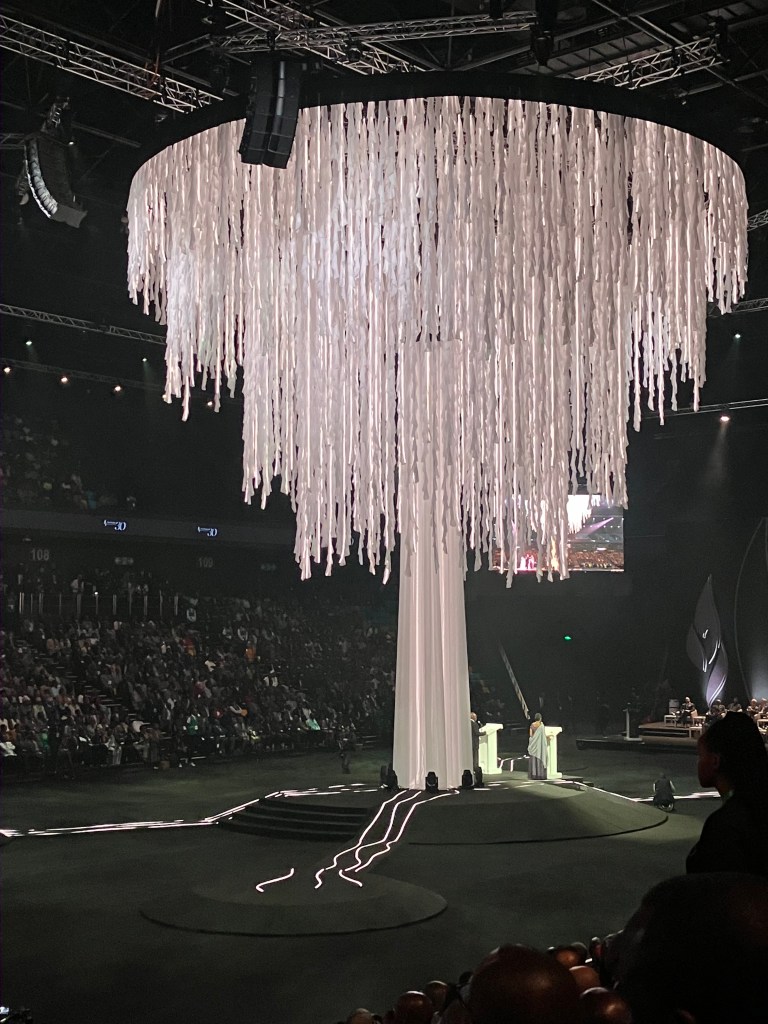
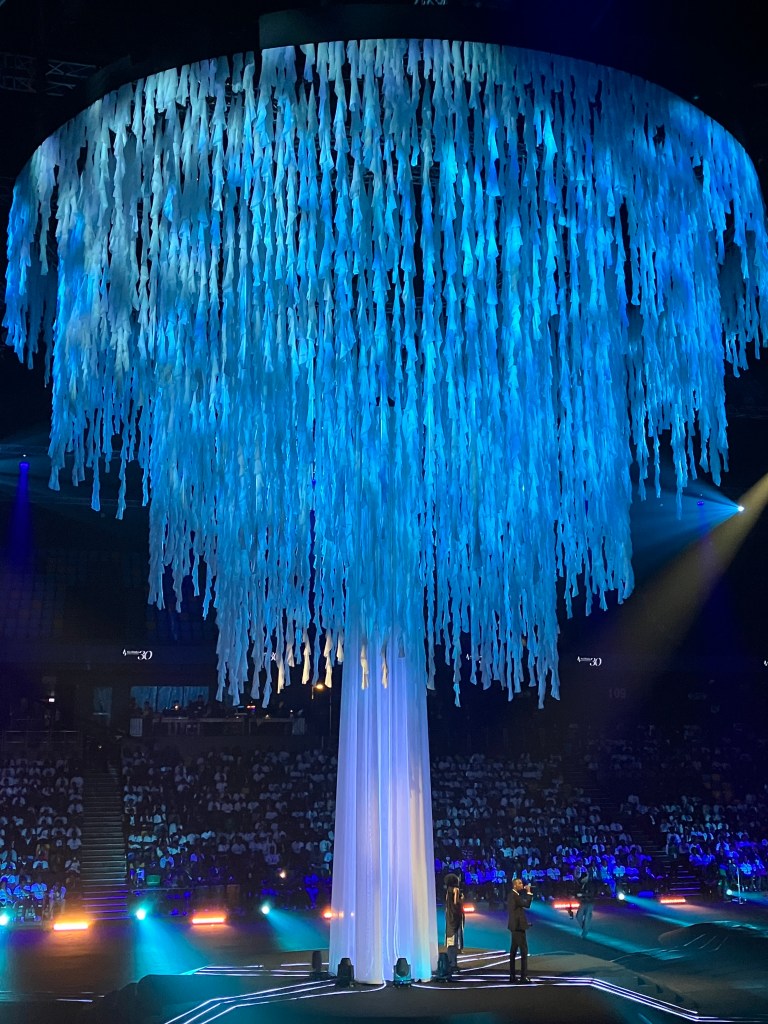
Kwibuka 30 Tree, which symbolises protection, aspirations, memory

It has been nearly a month since I attended Kwibuka in Kigali. The experience was truly unique as the main event, hosted at the BK Arena (as seen in the picture above), with speeches, dances and artwork that symbolised not only Rwanda’s horrific past but its desired future. While there are more experienced researchers focusing on commemorations (I highly suggest looking at the work done by Dr Samaantha Lakin), I decided to look back with my Political Science lenses. Baldwin, Longman, and others provide a more critical examination of Rwanda’s commemorations, so I decided to take a rather different approach to analysing this important event.


Rwandans are commemorating those who perished during the 1994 Genocide against the Tutsi. It has been thirty years since the Genocide ripped through Rwandan society, leaving up to a million Tutsi and non-extremist Hutus dead. This 100-day commemoration period, starting on April 7, the day which initiated the Genocide, witnesses Rwandan society remembering and reflecting on historical divisions between Tutsi, Hutu, and Twa. More importantly, it is a time for Rwandans to come together to promote unity and reconciliation under the banner of Ndi Umunyarwanda, loosely translated as ‘I am Rwandan’.

While it initially comes from Article 10 of the 2003 Constitution, its current policy iteration began in 2013 with the desire to foster national unity to prevent future divisionism and genocide.

The Rwandan government’s agency responsible for Kwibuka, the Ministry of National Unity and Civic Engagement (MINUBUMWE), will make this year’s commemoration a grand event as it is the thirtieth anniversary of the Genocide. Similarly to the twentieth commemoration, multiple international, national, and local events will be held with an eye on the neighbouring Democratic Republic of Congo (DRC) and the continuing social engineering of Ndi Umunyarwanda.  

Tensions with DRC:

The recent wave of violence in eastern DRC has become ever so worrying for Rwandans. In an attempt to defeat one of the multiple Congolese rebel groups dotting the landscape, the DRC’s military, the Armed Forces for the Democratic Republic of Congo (FARDC), have increasingly been cooperating with Rwanda’s primary external security threat, the Democratic Forces for the Liberation of Rwanda (FDLR). This Congolese-based rebel group are the remains of the genocide perpetrators of Rwanda’s Genocide who wish to re-establish ethnic divisions, outlawed by the Ndi Umunyarwanda policies of ethnic unity, and return the country to that of the Genocide. The increased cooperation between the two actors has led to Rwandan concerns about increased military supplies and political legitimacy given to the FDLR.

The true threat posed by the FDLR is not its ability to try to defeat the Rwandan Defence Forces (RDF) and retake the country. The perhaps 2000-strong FDLR force has little strategic, operational or tactical capabilities to control Rwanda from President Paul Kagame’s government. However, their genuine threat stems from their ideology.

Former RDF Chief of Staff and recently appointed Rwandan High Commissioner to Tanzania Patrick Nyamvumba commented on the FDLR’s threat to Rwanda’s ontological security. As I argue in my book, the danger is akin to a mosquito that cannot do much harm to an adult human. Instead, it is the malaria they carry, i.e. genocide ideology, which poses the threat. Many within the Rwandan government are fearful that not enough time has passed to foster a resilient post-genocide unified identity that can fully expel the tempting ideology which composes the FDLR. Whether this is true or not can be argued, but the threat remains in the minds of Rwandan policymakers.

The second threat posed by eastern DRC is the increasingly genocidal language coming from the Congolese government. Congolese President Felix Tshisekedi has already called President Kagame ‘Hitler‘, but more troubling is his government’s language and actions against the Banyamulenge population. This group historically originated from Rwanda but has resided in Congo for generations despite facing past persecution. Over the past two years, violence against them, often from the FARDC and their FDLR allies, has seen the return of the Movement of March 23 (M23) rebel force from its near decade of inaction. However, the language coming from the Congolese government is worrying Rwandan policymakers.

Congolese Minister of Higher Education Muhindo Nzangi and government Spokesman Patrick Muyaya Katembwe have openly called for the persecution of the Banyamulenge. One Rwandan policymaker commented that the language coming from Congolese officials reminded him of language used by Rwanda’s perpetrators just before the Genocide. With this level of genocide ideology just to the nation’s west, the question is how serious the threat is to Rwanda’s post-genocide social reconstruction of Ndi Umunyarwanda.

Combatting Genocide Ideology:

Since the National Commission for Unity and Reconciliation (NURC), the predecessor of MINUBUMWE, the Ndi Umunyarwanda, the Rwandan government has continued implementing this policy to foster ethnic unity among Rwandans. This ideology follows the governing Rwanda Patriotic Front’s (RPF) interpretation of Rwandan history, which upholds Tutsi, Hutu and Twa as a form of socio-economic division rather than rooted in ethnic differences. However, Western scholars such as Reyntjens, Des Forges and Newbury dismiss this interpretation of history. Nevertheless, they miss an essential aspect of why Ndi Umunyarwanda exists. It exists as a mechanism for the country to move on from its past divisions to formulate ethnic unity that will prevent the environment of social divisions that can lead to a repetition of the Genocide.

Many within the Rwandan government, especially in the inner circles of power, are those who either fought to end the Genocide or were victims of it. The deep-rooted scars of their experience influence their desire for national social re-engineering. Many are still nervous that the past Hutu extremist ideology that promoted divisionism and hatred, which the FDLR still promotes, can override the progress made by Ndi Umunyarwanda and return. The comfort of scapegoating others for one’s problems is often tempting. The language coming from the DRC is worrisome for Rwandan policymakers, as it not only threatens the Banyamulenge but also follows patterns that once and possibly again inflict on Rwandan society. At least in the capital city of Kigali, the conditions for social divisions seem relatively minimal.

During my most recent fieldwork periods in Rwanda (December 2022-March 2023 and August to September 2023), I paid particular interest in whether Ndi Umunyarwanda had taken hold in the new generation of Kigali’s residents. During a 2016 PhD fieldwork, some government officials commented that it would take a generation or two for social unity to be achieved in the form of Rwandans being unconcern of one’s family, possibly Tutsi, Hutu or Twa identity.

While conducting fieldwork, I attended multiple social gatherings with Kigali’s growing middle class of Rwandans between the ages of 24 and 35. During conversations with fifty Millennials and Gen Z, it appeared that the government’s wish for the youth’s acceptance of Ndi Umunyarwanda had been effective. All attendees had little desire to bring up what they classified as their ‘parent’s divisions’ and instead saw each other as fellow Rwandans. These conversations illustrate the success of Ndi Umunyarwanda and, more broadly, the Rwandan government’s desire for post-genocide social reconstruction.

What will Rwandans Commemorate?

With the thirtieth commemoration, Rwandans will continue to examine their history of how the nation descended into Genocide through divisionism. Rwandan embassies and high commissions have and are still engaging with the Rwandan diaspora, while local villages continue to have relatively simple events to remember the past and help foster a united future. They need not look far to see the warning signs of how society can slip into scapegoating and securitising each other can lead to violence. The increased violence and ethnic-based language in eastern DRC are a steadfast reminder of the importance of Ndi Umunyarwanda. While the physical threats from across the border cannot be dismissed, internally, Rwanda is closer to Ndi Umunyarwanda unity rather than genocide divisions.