Categories
Uncategorized

Kwibuka 30: Commemorating Thirty Years since the Genocide against the Tutsi

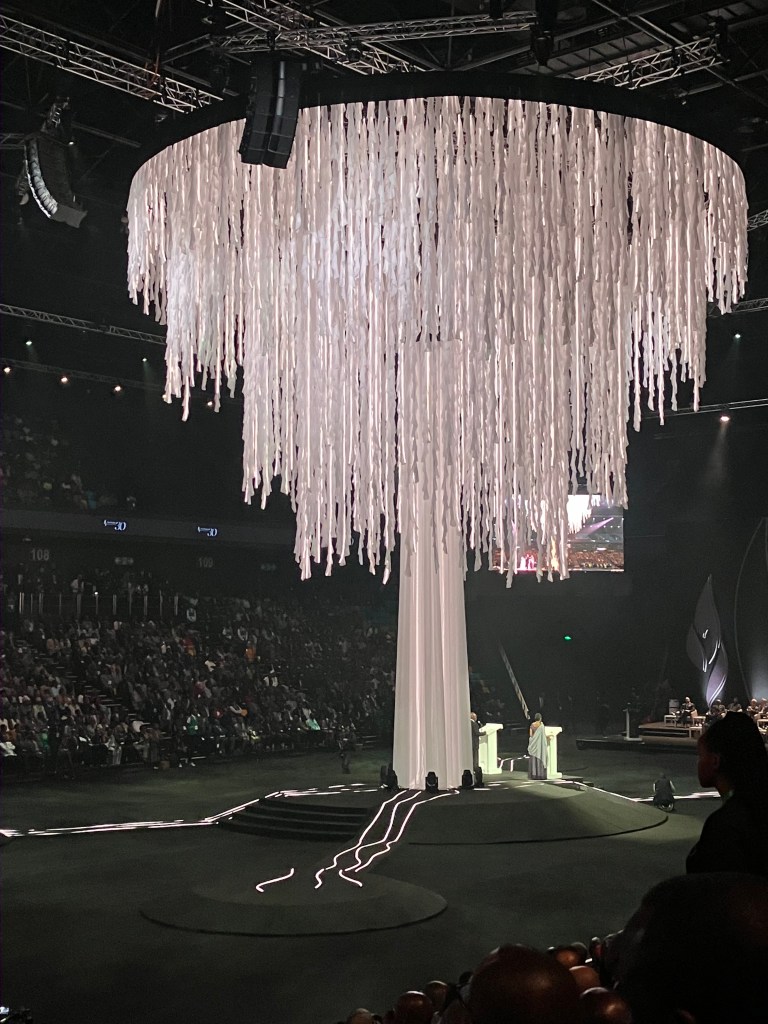
Kwibuka 30 Tree, which symbolises protection, aspirations, memory

It has been nearly a month since I attended Kwibuka in Kigali. The experience was truly unique as the main event, hosted at the BK Arena (as seen in the picture above), with speeches, dances and artwork that symbolised not only Rwanda’s horrific past but its desired future. While there are more experienced researchers focusing on commemorations (I highly suggest looking at the work done by Dr Samaantha Lakin), I decided to look back with my Political Science lenses. Baldwin, Longman, and others provide a more critical examination of Rwanda’s commemorations, so I decided to take a rather different approach to analysing this important event.


Rwandans are commemorating those who perished during the 1994 Genocide against the Tutsi. It has been thirty years since the Genocide ripped through Rwandan society, leaving up to a million Tutsi and non-extremist Hutus dead. This 100-day commemoration period, starting on April 7, the day which initiated the Genocide, witnesses Rwandan society remembering and reflecting on historical divisions between Tutsi, Hutu, and Twa. More importantly, it is a time for Rwandans to come together to promote unity and reconciliation under the banner of Ndi Umunyarwanda, loosely translated as ‘I am Rwandan’.

While it initially comes from Article 10 of the 2003 Constitution, its current policy iteration began in 2013 with the desire to foster national unity to prevent future divisionism and genocide.

The Rwandan government’s agency responsible for Kwibuka, the Ministry of National Unity and Civic Engagement (MINUBUMWE), will make this year’s commemoration a grand event as it is the thirtieth anniversary of the Genocide. Similarly to the twentieth commemoration, multiple international, national, and local events will be held with an eye on the neighbouring Democratic Republic of Congo (DRC) and the continuing social engineering of Ndi Umunyarwanda.  

Tensions with DRC:

The recent wave of violence in eastern DRC has become ever so worrying for Rwandans. In an attempt to defeat one of the multiple Congolese rebel groups dotting the landscape, the DRC’s military, the Armed Forces for the Democratic Republic of Congo (FARDC), have increasingly been cooperating with Rwanda’s primary external security threat, the Democratic Forces for the Liberation of Rwanda (FDLR). This Congolese-based rebel group are the remains of the genocide perpetrators of Rwanda’s Genocide who wish to re-establish ethnic divisions, outlawed by the Ndi Umunyarwanda policies of ethnic unity, and return the country to that of the Genocide. The increased cooperation between the two actors has led to Rwandan concerns about increased military supplies and political legitimacy given to the FDLR.

The true threat posed by the FDLR is not its ability to try to defeat the Rwandan Defence Forces (RDF) and retake the country. The perhaps 2000-strong FDLR force has little strategic, operational or tactical capabilities to control Rwanda from President Paul Kagame’s government. However, their genuine threat stems from their ideology.

Former RDF Chief of Staff and recently appointed Rwandan High Commissioner to Tanzania Patrick Nyamvumba commented on the FDLR’s threat to Rwanda’s ontological security. As I argue in my book, the danger is akin to a mosquito that cannot do much harm to an adult human. Instead, it is the malaria they carry, i.e. genocide ideology, which poses the threat. Many within the Rwandan government are fearful that not enough time has passed to foster a resilient post-genocide unified identity that can fully expel the tempting ideology which composes the FDLR. Whether this is true or not can be argued, but the threat remains in the minds of Rwandan policymakers.

The second threat posed by eastern DRC is the increasingly genocidal language coming from the Congolese government. Congolese President Felix Tshisekedi has already called President Kagame ‘Hitler‘, but more troubling is his government’s language and actions against the Banyamulenge population. This group historically originated from Rwanda but has resided in Congo for generations despite facing past persecution. Over the past two years, violence against them, often from the FARDC and their FDLR allies, has seen the return of the Movement of March 23 (M23) rebel force from its near decade of inaction. However, the language coming from the Congolese government is worrying Rwandan policymakers.

Congolese Minister of Higher Education Muhindo Nzangi and government Spokesman Patrick Muyaya Katembwe have openly called for the persecution of the Banyamulenge. One Rwandan policymaker commented that the language coming from Congolese officials reminded him of language used by Rwanda’s perpetrators just before the Genocide. With this level of genocide ideology just to the nation’s west, the question is how serious the threat is to Rwanda’s post-genocide social reconstruction of Ndi Umunyarwanda.

Combatting Genocide Ideology:

Since the National Commission for Unity and Reconciliation (NURC), the predecessor of MINUBUMWE, the Ndi Umunyarwanda, the Rwandan government has continued implementing this policy to foster ethnic unity among Rwandans. This ideology follows the governing Rwanda Patriotic Front’s (RPF) interpretation of Rwandan history, which upholds Tutsi, Hutu and Twa as a form of socio-economic division rather than rooted in ethnic differences. However, Western scholars such as Reyntjens, Des Forges and Newbury dismiss this interpretation of history. Nevertheless, they miss an essential aspect of why Ndi Umunyarwanda exists. It exists as a mechanism for the country to move on from its past divisions to formulate ethnic unity that will prevent the environment of social divisions that can lead to a repetition of the Genocide.

Many within the Rwandan government, especially in the inner circles of power, are those who either fought to end the Genocide or were victims of it. The deep-rooted scars of their experience influence their desire for national social re-engineering. Many are still nervous that the past Hutu extremist ideology that promoted divisionism and hatred, which the FDLR still promotes, can override the progress made by Ndi Umunyarwanda and return. The comfort of scapegoating others for one’s problems is often tempting. The language coming from the DRC is worrisome for Rwandan policymakers, as it not only threatens the Banyamulenge but also follows patterns that once and possibly again inflict on Rwandan society. At least in the capital city of Kigali, the conditions for social divisions seem relatively minimal.

During my most recent fieldwork periods in Rwanda (December 2022-March 2023 and August to September 2023), I paid particular interest in whether Ndi Umunyarwanda had taken hold in the new generation of Kigali’s residents. During a 2016 PhD fieldwork, some government officials commented that it would take a generation or two for social unity to be achieved in the form of Rwandans being unconcern of one’s family, possibly Tutsi, Hutu or Twa identity.

While conducting fieldwork, I attended multiple social gatherings with Kigali’s growing middle class of Rwandans between the ages of 24 and 35. During conversations with fifty Millennials and Gen Z, it appeared that the government’s wish for the youth’s acceptance of Ndi Umunyarwanda had been effective. All attendees had little desire to bring up what they classified as their ‘parent’s divisions’ and instead saw each other as fellow Rwandans. These conversations illustrate the success of Ndi Umunyarwanda and, more broadly, the Rwandan government’s desire for post-genocide social reconstruction.

What will Rwandans Commemorate?

With the thirtieth commemoration, Rwandans will continue to examine their history of how the nation descended into Genocide through divisionism. Rwandan embassies and high commissions have and are still engaging with the Rwandan diaspora, while local villages continue to have relatively simple events to remember the past and help foster a united future. They need not look far to see the warning signs of how society can slip into scapegoating and securitising each other can lead to violence. The increased violence and ethnic-based language in eastern DRC are a steadfast reminder of the importance of Ndi Umunyarwanda. While the physical threats from across the border cannot be dismissed, internally, Rwanda is closer to Ndi Umunyarwanda unity rather than genocide divisions.
Categories
Uncategorized

Faustin Twagiramungu: A Dinosaur of Rwandan Politics Long Gone

On 2nd December 2023, the news broke on social media that Rwanda’s former Prime Minister Faustin Twagiramungu died in Belgium. While most Global North-based activists mourn his loss and make somewhat questionable claims of him being a ‘symbol of democracy’ for Rwanda, his loss in Rwanda will go relatively unnoticed. This brings up an interesting question of what happened to Twagiramungu in the consciousness of not just the Rwandan public but the new generation of Rwandans whose lives consist mainly after the Genocide against the Tutsi. Global North social activists will answer how minor mention of his death in Rwanda originates from President Paul Kagame or the Rwanda Patriotic Front (RPF). However, that is problematic as it does not reflect the realities in Rwanda.

Who Was Faustin Twagiramungu?

Born in 1945 in Cyangugu Province, Twagiramungu lived a relatively everyday life for a Rwandan Hutu. Since independence in 1962, Rwanda’s social norms favoured the majority Hutu (composing roughly 84% of the population) over the minority Tutsi (comprising approximately 15%) and the minority Twa (comprising less than 1%). The previous 1959 Hutu Revolution, promoted by the nation’s first post-colonial President, Grégoire Kayibanda, glorified Hutu supremacy. Mass pogroms led to thousands of Tutsi to flee into neighbouring countries. Over the coming years, anti-Tutsi pogroms left thousands dead and tens of thousands to flee into neighbouring countries. During the First Republic (1962-1973), southern Hutus, such as Twagiramungu, received economic, political and societal favouritism. However, he did not receive the benefits of his ethnic and geographical origins for long as he studied and worked in Canada starting in 1968 and continued until 1976. It was during the reign of General Juvénal Habyarimana, who overthrew Kayibanda in a coup d’état that he returned to run a transportation company called Société des Transports Internationaux au Rwanda (STIR).

His business success outstripped his now disenfranchised origins. President Habyarimana and his inner circle called the akazu, loosely translated as ‘little house’, shifted favouritism from the South to the North. Tutsis still experienced institutional racism, nonetheless. The geographical power shift and anger towards the President led him into politics. However, Rwanda’s political landscape was changing. The one-party dictatorship of Habyarimana began to loosen. As Kroslak writes, Rwanda and many African nations under the French’s sphere of influence started a ‘Paristroika’ moment. With the Cold War ending and Western capitalism winning the ideological war, the Western donor nations of the United States, France and Great Britain demanded political and economic liberalisation. This new movement became an opportunity for Twagiramungu.

The Beginning of his Political Career and the Genocide against the Tutsi:

In 1991, he became a prominent Mouvement Démocratique Républicain (MDR) member. While MDR attempted to differentiate itself from Habyarimana’s party, the Mouvement Révolutionaire National pour le Développement (MRND), by claiming it was the ideological successor of former President Kayibanda and his lost political party, the Parti du Mouvement de l’Emancipation Hutu (Parmehutu) were banned and dissolved shortly after Habyarimana’s coup. Additionally, MDR softened its tone on Tutsis compared to its predecessor. But like many of Rwanda’s new political parties, there were significant divisions based not only on Rwanda’s Tutsi population but also on whether to engage with the RPF.

In October 1990, the RPF’s military wing, the Rwandan Patriotic Army (RPA), crossed from Uganda to attack the Rwandan military, the Rwandan Armed Forces (FAR). The beginning of the Liberation War (1990-1993) began with initial setbacks for the RPA. Successful tactics and offensives in 1991, 1992 and 1993 led to peace negations and political transformations. By August 1993, the RPF and the Habyarimana regime agreed upon the Arusha Accords. The akazu lost significant power as Rwanda’s political system broadened beyond the original ‘Paristroika’ of the early 1990s to include the RPF. This benefited Twagiramungu’s career and ambition.

Including the RPF in Rwanda’s political space led to President Habyarimana being much more tactical in engaging with the opposition parties. He used wealth, favours and threats to divide political parties. The MDR was no different, especially after the forced exile of MDR leader and Prime Minister Dismas Nsengiyaremye in July 1993. His favouritism towards working with the RPA led him to be seen as an ‘accomplice’ by the FAR and Habyarimana. While Twagiramungu would be the ideal replacement, he instead manoeuvred for Agathe Uwilingiyimana, a moderate within the party, for the Prime Minister position. She would later die during the Genocide against the Tutsi. It is important to note that while MDR had its moderates, it also had its Hutu extremists, such as Jean Kambanda, who would become Rwanda’s Prime Minister during the Genocide against the Tutsi.

On the night of 6th April 1994, the Falcon-50 Presidential Plane carrying President Habyarimana was shot down, most likely by FAR extremist actors, igniting the Genocide against the Tutsi. Twagiramungu resided in Kigali and received help from the United Nations Assistance Mission in Rwanda (UNAMIR), who brought him and his family to safety at their base in Kissimenti. Prunier, Dallaire and Anyidoho write of how UNAMIR forces, rather than the better equipped RPA, who had previously stationed its 3rd Battalion (more popularly known as the 600), rescue Twagiramungu’s life. There is speculation that he did not want to be saved by the RPA in order to retain the image of independence from the RPF, unlike Nsengiyaremye. Whatever the reason, he did not want RPA assistance; nevertheless, he benefited from their protection at Amahoro Stadium. Shortly after the Genocide began, the RPA’s 3rd Battalion, under the command of Lt. General Charles Kayonga, sent Eagle Company to Amahoro Stadium, which housed UNAMIR’s headquarters, to protect it from military and genocidal forces. The Genocide ended when the RPA defeated and removed the genocide regime on the 18th of July 1994. The Campaign against Genocide War had ended, but Rwanda’s landscape dramatically changed.

After the Genocide:

Despite winning the war, the RPF kept much of the previous 1993 Arusha Accords in place. There were changes, such as the Hutu extremist parties that were once in the government would be banned. Their political seats and ministries were distributed to other parties but mostly RPF. While there were only minor changes in the new post-genocide transitional government compared to the one agreed upon in the Accords, Rwanda had changed. During the first few days of the Genocide against the Tutsi, non-extremist, politically active Hutus were targeted alongside Tutsis by genocide forces. The political party’s divisions, which President Habyarimana created within many oppositional parties, provided opportunities for extremist elements to kill off moderate party members during that first week. Many of the extremist political party members were either dead or fled the country. Thus, few oppositional leaders left when the war and Genocide was over. Twagiramungu was one of the lucky few.

In accordance with the Arusha Accords, the MDR retained the Office of the Prime Minister. Twagiramungu, being one of the few remaining MDR members, became the nation’s new Prime Minister. While he had hoped the position would grant him political favour, he did not realise how the political landscape had changed. Unlike the early 1990s, Rwanda was now under the control of the RPF, which had just ended the Genocide against the Tutsi and won the Campaign against Genocide War. They suffered the least in terms of lost political leaders. However, they were not immune to the political changes that had taken place. Kimonyo writes how, during the remaining 1990s, some RPF officials wanted to rule the country as the past presidents had done. This is not in reference to a political dictatorship but the style of politics and corruption that had existed before. The infighting, corruption and ineptness led to not only the removal of Rwanda’s post-Genocide President Pasteur Bizimungu in 2000 but a significant shakeup in the party and country. Vice-President and Minister of Defence Paul Kagame became the next President and de facto leader of the RPF.

Even before the constitutional changes in 2000, which included some of the first legislation to ban ethnic divisionism, the political system was considerably different than what Twagiramungu had hoped. The 1995 Kibeho Massacre, along with a diminished role in policymaking, led Twagiramungu to speak out against the post-Genocide government. He increasingly claimed that Hutus within the government were either puppets or their ethnic concerns were ignored. Recall that Twagiramungu grew up in Rwanda’s ethnic divisions, which had always not only favoured Hutus but acknowledged ethnic partitions. This radically differed from the RPF’s desired social belief, which dismissed ethnic divisionism to foster the unifying social norm of Ndi Umunyarwanda, loosely translated as ‘I am a Rwandan.’ While the policy would come into existence years later, the institutional foundation for social unity began shortly after the installation of the post-Genocide government.

Twagiramungu resigned as Prime Minister on 28th August 1995. He claimed it was a result of the Kibeho Massacre. However, this is not the whole answer, as he would never have longed for this new political landscape. Unlike those such as the current Minister of Foreign Affairs Vincent Biruta, a member of the Parti Social Démocrate (PSD) and saved by the RPA’s 3rd Battalion during the Genocide, he still felt that the pre-Genocide political atmosphere of Rwanda still existed. Fundamentally, it was gone, and he became somewhat of a dinosaur of a past political environment that no longer existed. The RPF were the winners of the Liberation and Campaign against Genocide War and thus set the tone for Rwanda’s political system. Even that system did not last long as by 2000, Paul Kagame began his Presidency, which continues until today. Rwanda’s political landscape would never return to the early 1990s.

Life outside Rwanda:

Twagiramungu departed Rwanda for Belgium in March 1996. It was there he created the oppositional party, Democratic Forces for Resistance, in 1997. Working with other exiled movements and former political leaders of the Habyarimana regime, he tried to mount a serious campaign against the RPF. However, there would be little hope for proper coordination as the widely different political parties, each holding various beliefs, never unified.

Despite Twagiramungu’s lack of recognition of the shifting political landscape and greatly diminished role for him and his party, he nevertheless attempted to run for President as an Independent during the 2003 Presidential Elections. His platform focused on economic issues and questioned the RPF’s social messages. He ran as an Independent as the MDR party became banned months before the election. The Rwandan government responded that its ban resulted from continued belief in ethnic divisionism. However, some members formed a new party, the Party for Progress and Concord (PPC), which currently has one representative in the Chamber of Deputies. As expected, Twagiramungu lost the election to President Kagame, winning just under 140,000 votes compared to his opponent, who won over 3.5 million. While international observers claimed election interference, there was little chance for Twagiramungu to win the election.

By 2003, Rwanda’s political landscape had changed again. President Kagame was now in control, and the nation would see changes towards economic growth, increased access to education and healthcare, and what Rwandans tell me is their most pressing concern: security. The political dynamics found in Rwanda in the early 1990s were now impossible to recreate. Additionally, Rwandans became somewhat sceptical of Western constructs of political liberalisation, which was perceived as a reason for Hutu extremist parties and actors gaining the power to conduct the Genocide against the Tutsi. Political landscapes had changed not just in Rwanda but throughout central and eastern Africa.

Despite the seeming rejection of Twagiramungu in 2003, it did not end his political ambitions. He formed the Rwandan Dream Initiative (RDI) in 2010. He later combined the party with others, including the Democratic Republic Liberation for Rwanda (FDLR), which contains remnant genocide forces, to form the Coalition of Political Parties for Change (CPC). The CPC’s inclusion of the FDLR is highly problematic as the Hutu extremist rebel force in eastern Congo holds policies containing Rwanda’s return to ethnic divisionism and ‘finishing’ the Genocide. The party collapsed within a year, but he remained President of the RDI party. However, he continued to be accused of being aligned with the FDLR’s genocide ideology. Until his final days, Twagiramungu continued to be active on social media, criticising the Rwandan government President Kagame and denying important facts about the Genocide against the Tutsi. He became an advocate of the false ‘Double Genocide’ theory, which claims the RPA committed their Genocide.

Twagiramungu’s Significance Today?

Twagiramungu’s recent passing holds little significance in Rwanda. Most Rwandans I talked to while conducting fieldwork either knew little about him (just that he was a Prime Minister and critic of the government) or were not interested. He is seen as a relic of the past or a historical footnote who did not adapt to Rwanda’s shifted political landscape. He also offered little to Rwandans who were satisfied with the status quo under the RPF. The stability the RPF brought to Rwanda should not be so easily dismissed. Rwandan informants often comment on how Global North critics live a privileged life of security, which leads to the great benefit of not knowing what it seriously means to have their lives at risk. The political luxuries in the Global North take time to develop, with most Rwandans expressing their satisfaction with the political stability even if it is not perfect.

Twagiramungu and his oppositional political successors, such as Victoire Ingabire Umuhoza, try to operate within a Rwandan landscape that does not exist anymore. Most Rwandans, especially the growing Millennial and Generation Z population, are not interested in the political pluralism in the Global North or Rwanda during the early 1990s. While critics of the Rwandan government will quickly dismiss this notion, their voices do not represent the ones residing in Rwanda. Rwandans frequently express their views of Rwandan politics to me, often with many complaints from local officials or scandals. However, very few want President Kagame to be replaced. Instead, many express their concerns if President Kagame steps down in the near future.

Twagiramungu, Victoire Ingabire and others see Rwanda through the lens of the early 1990s rather than Rwanda in 2023. This is why their political impact on Rwanda will remain negligible at best.