There are a few people who can truly impact one’s life: their character, humour, knowledge and so much more lead to one being gravitated towards them.
While there are so many people whom I have the highest opinion of, none are like Lt General Innocent Kabandana. While others will be able to write a more detailed description of Kabandana’s accomplishments, I want to focus on what the man meant to me.
I met Kabandana in 2012 during the closing ceremonies for Gacaca. During the second day of proceedings, he, along with much of the RDF’s command, assembled just behind where my mother and I sat. We had both been invited to this historical conference. Sitting with so many other RDF leaders, he was perhaps the quietest of them all. He sat, intensely watching the proceedings.
He never dismissed or trivialised any opportunity to help Rwandans or better understand his homeland. He wanted to learn every detail about Gacaca’s success, as it was an opportunity for him to participate, even if only as an audience member, in something that helped repair the nation. We briefly talked afterwards, but I never expected to develop such an admiration for the man.
A few months later, Kabandana was sent to the United States. He became the Director of Military Cooperation (military attaché) at the Rwandan Embassy in Washington, DC. While he had served in other countries, such as South Sudan and later Mozambique, this was perhaps his first job that was inherently political, as he was representing his country’s security interests.
For those who knew Kabandana, they will know he was not a man of politics. Once, I joked that he could become a fine government minister one day, but he shook his head in disagreement. He was a soldier. All he wanted to do was finish the job as best he could by keeping his head down and not playing any games. For Kabandana, the military was an instrument that needed to be used for good.
As we discussed many years later, he firmly believed that the military followed the orders (public policy) of the government. Following the ideas from the famous Prussian General Carl von Clausewitz, the government creates public policy, and the military follows that policy. While militaries focused on providing state security, Kabandana believed it could be used for so much more.
For him, the RDF served a vital role in Rwanda’s reconstruction. It carried out the policies to make Rwanda safe for all those who follow Ndi Umunyarwanda. He was always proud to serve in a military that not only ended the Genocide against the Tutsi (which he served in the 157th CMF) but also prevented the nation from entering a cycle of death, hatred and continual violence. Additionally, the RDF could become a tool for public policy beyond just security, enhancing the lives of everyday Rwandans.
Returning to our developing friendship…
It was August 2012 that we met again at a lecture on Rwanda’s governance at the University of Pennsylvania. We recognised each other from the closing ceremony of Gacaca and began planning to meet afterwards to discuss Rwandan foreign affairs. (This was just before beginning my PhD) Unbeknownst to me at the time, this was the first moment that began our deep friendship.
Over the course of the following months and years, I met with Kabandana more times than I can remember. We always discussed Rwanda’s history, culture, reconstruction and the nation’s future. He continually challenged my perceptions and pushed me to become a better researcher and person. At times, we intensely debated broader subjects of international relations, economics, philosophy, metaphysics and so much more. To me, he was a Renaissance man, always interested in a wide range of subjects. Some of my most treasured moments came from my ability to make him laugh.
For instance, whenever we emailed or texted each other, I would call him ‘Uncle General’. I attempted to combine displaying my respect for his military rank and all he accomplished, as well as to make him smile. Maybe I did it to show how much I cared for him and saw him as a father figure in my own life. It was a badge of honour to make him laugh and later to make him proud after I completed my PhD.
Most of all, he imparted a deep sense of personal ethics. I often asked him for advice at times when I experienced pressure to conform to specific narratives or conduct questionable ethical acts.
When I was challenged, he was there…
During my PhD studies, I was asked to uncover some sensitive information before conducting one of my multiple fieldwork periods back in 2016. The request (to put it mildly) came from someone who could (and later to some extent did) make my PhD studies a bit of a nightmare. Fundamentally, the person wanted to use me to ‘find out if the gossip is correct’ about someone. I pushed back against the request as I felt it was inappropriate and well beyond my research scope. However, the person placed me in a difficult position. Should I cave into the pressures from someone who could make or break my PhD and academic career, or do what is right?
I turned to the most ethical person I knew… Innocent Kabandana
We met during that 2016 fieldwork period. While the conversation was mostly about family, it was also about his upcoming opportunities as Commander of the Special Forces. I decided to disclose what I had been asked to do. Kabandana looked me square in the eyes and calmly said how I knew the difference between what is and is not appropriate. And how the request crossed beyond any ethical or professional line. Despite the repercussions, I knew at that moment what I had to do. I refused even to consider carrying forth the ‘request’.
That is how I will remember Innocent Kabandana.
While I will never forget his laughter, debates and so much more, I will remember his ethics the most. He believed in honesty, morals and always doing what is right, even if it might not be advantageous to do so.
While spending time at his office, at home, or elsewhere, he challenged my beliefs and understanding of Rwanda and myself.
His passing seemingly came out of nowhere for me. I had heard rumours of his passing before, which we would always laugh about on the phone. We had talked about his health struggles, but he always held the desire never to give up. During the last wave of rumours, just a month or so ago, we talked and even began planning to meet in November.
Rwanda has lost a great man.
I have lost a great friend, father figure, mentor and guiding light in the journey which we call life.
Thank you for everything you did for me.
I will never forget you.
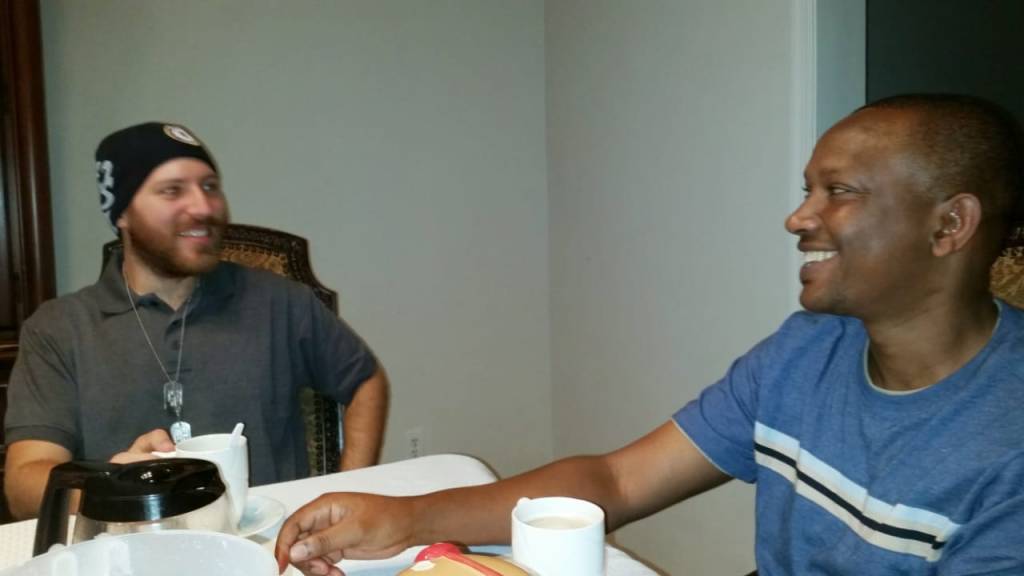
 Jonathan R Beloff
2 replies on “Goodbye Uncle General”
Thank you Jonathan!
LikeLike
Our hearts to all friends and family 💓🙏🏾 RIP
LikeLike